Xiang Songzuo: Why Young Chinese Shouldn't Rush to Buy Homes
Economist Xiang Songzuo argues young Chinese should stay light and rent, explains why China's property market hasn't bottomed, and breaks down six layers of human intelligence.
Source: 163.com
In August, at a summer forum in Shenzhen themed around intelligent transformation and economic rise, one of China's most prominent economists delivered a message that cuts against decades of conventional wisdom. Xiang Songzuo, a professor at Peking University's HSBC Business School, told an interviewer that young people do not need to rush into homeownership — and that the obsession with buying property may itself be a trap of the mind. His remarks land at a moment when China's real estate market remains under pressure, youth unemployment is a persistent concern, and a generation raised on the idea that "a house equals security" is being forced to reconsider that equation.
Key Takeaways
- Young people should stay "light" in their 20s and 30s. Xiang argues that the period from graduating university to roughly age 40 or 45 is when a person should maximize their abilities and build a career. Carrying a massive mortgage during those years restricts mobility, discourages risk-taking, and makes it harder to leave an unsatisfying job or start a business.
- Renting offers flexibility that ownership destroys. If a young professional works in Shenzhen this year and might move to Shanghai next year, a rental lease adjusts far more easily than a property sale. Xiang notes that renting is a completely normal lifestyle in many developed economies — the stigma attached to it in China is cultural, not rational.
- The property market has not truly bottomed. Despite forecasts from many institutions that the market would hit its floor this year, Xiang points to continued declines in new and second-hand home sales, transaction area, and prices. The real signal, he says, is not a single month of data but whether household expectations have genuinely stabilized.
- Expectations, not data points, drive the market. If most people still believe prices will fall further, buyers wait and sellers rush to list, pushing prices down even more. Only when expectations settle — when buyers re-enter and sellers stop cutting prices — can the market be considered truly stable.
- Social security needs to shift from investing in things to investing in people. Xiang argues that China can afford to raise rural pensions and healthcare coverage; the obstacle is the structure of fiscal allocation. He has repeatedly called for raising the rural pension from roughly 100–200 yuan per month to 1,000 yuan, and for making education essentially free from birth through university.
- Rural pensions are a hard-won achievement. For most of Chinese history, peasants had no pension at all. The rural pension system and cooperative medical schemes were built only in the past one or two decades. Xiang acknowledges the progress while insisting the current level remains far too low.
- AI will replace tasks, not original thought. Xiang concedes that AI handles calculation, statistics, chart generation, and data organization far better than humans. But the hard part — asking genuinely new, high-order questions — remains beyond large models, which can only tell you what Keynes or Marx already said.
- Human intelligence has at least six layers. Xiang separates perception, memory, language, reasoning, imagination and intuition, and a higher "revelatory" intelligence. He stresses that great scientists, artists, and entrepreneurs rely most on intuition — Steve Jobs could not have calculated by pure reasoning what consumers would want next.

In-Depth Analysis
Xiang's argument is really two arguments braided together: a practical one about personal finance and a philosophical one about how Chinese society thinks. The practical claim — that a mortgage is a mobility tax on youth — is not radical economics. It echoes what labor economists in the United States and Europe have said for years about housing lock-in, where homeowners become less willing to relocate for better opportunities. What makes Xiang's version notable is that he is saying it inside China, where property ownership has functioned for two decades as the primary store of household wealth, a prerequisite for marriage in many families, and a proxy for social status. His framing of homeownership as a "cognitive cave" — a belief inherited rather than examined — is a direct challenge to that consensus.
The deeper structural point concerns expectations. China's property downturn has repeatedly defied predictions of a bottom because the market is not clearing on price alone; it is clearing on confidence. When households expect further declines, the rational move is to wait, which mechanically extends the decline. This is a classic coordination problem, and it explains why stimulus measures targeting transactions have had limited effect. Xiang's insistence that stabilization requires a shift in belief rather than a monthly data print is a subtle but important reframing: policy can influence prices, but it must first influence what people believe prices will do. That usually requires visible, durable commitments — on social security, on income growth, on the cost of raising a child — not just looser lending rules.
His social security proposals connect directly to the housing question. If families feel they must self-insure against illness, old age, and education costs, they will keep treating property as a savings vehicle and a safety net. Raising rural pensions and moving toward free education would reduce the precautionary demand for housing and free up consumption. Xiang's historical framing — that peasants had no pension for most of Chinese history — is a reminder of how young these institutions are, and how much fiscal room remains if the allocation structure shifts from infrastructure toward households.
Source: https://www.163.com/money/article/L6FMTCJ200259SCR.html
Related posts

Iran's 'Father of All Bombs' Challenge to US Military Dominance
Iran announces development of 'Father of All Bombs' in response to US military threats, escalating tensions in the Middle East amid potential new military actions.
EU's Cold War Approach to China's Arctic Activities Undermines Regional Stability
China criticizes EU's new Arctic strategy for adopting Cold War mentality, warning that geopolitical tensions threaten Arctic peace and sustainable development.

Travel Advisory: Safety Alert for Saudi Arabia Due to Airport Attacks
A deadly attack at King Fahd International Airport in Dammam has caused casualties and disrupted flights. The Chinese Embassy advises citizens to avoid travel and stay vigilant amid rising security threats.

US Israel Strike Plans Against Iran Post-Midterms: Escalation Risks
US and Israel are reportedly preparing for potential military action against Iran after the US midterm elections, as tensions rise and diplomatic efforts falter.
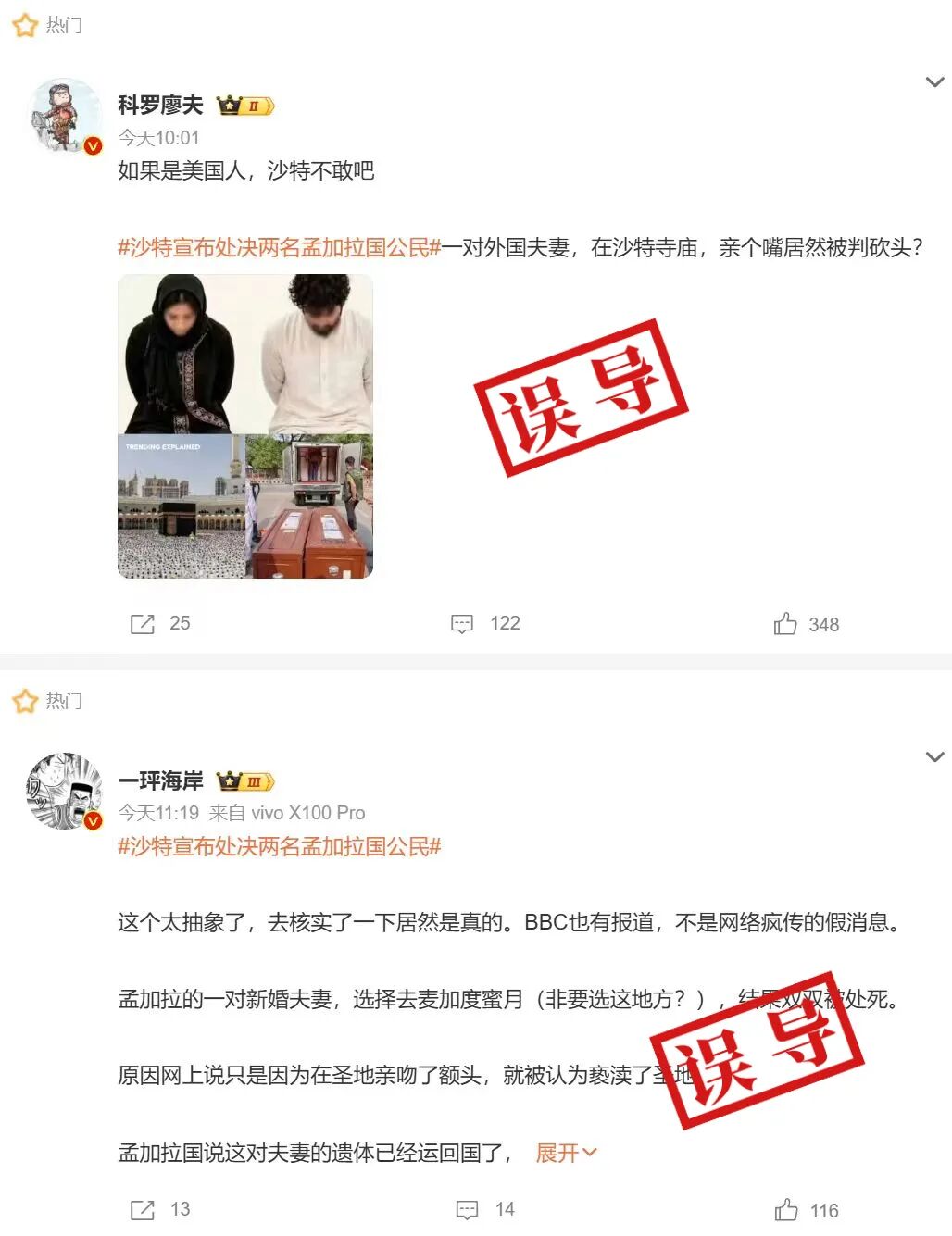
Saudi Arabia Execution of Bangladeshi Workers: Debunking the 'Honeymoon Kiss' Myth
Fact-checking the viral claims that two Bangladeshi citizens were executed in Saudi Arabia for a honeymoon kiss. We analyze the source of the rumors and the actual circumstances of their arrest and execution.

Wall Street Titans Debate AI Bubble: Internet Era or Long-Term Winner?
Citadel, BlackRock, and Oaktree leaders clash over AI valuations. Is the tech boom a repeat of 2000, or the dawn of a new era?

Southwest Airlines Cuts 2026 Profit Forecast Due to Rising Fuel Costs
Southwest Airlines lowers 2026 profit outlook to $2.60-$2.85/share due to higher fuel prices, despite strong demand.

eBay 9% Workforce Cut: Strategic Shifts & AI Investment in 2026
eBay cuts 1,000 jobs (9%) to streamline operations amid AI spending and Depop acquisition. Analyzing the second round of layoffs and strategic pivot.
Latest Articles
- The AI Stock Boom: Goldman Sachs, JPMorgan, and Morgan Stanley's Dominance
- The 30,000 km Journey of Beijing Swifts: Understanding Transnational Bird Conservation
- Japanese Telecom Giant Admits CEO's Actions Caused Massive Mongolia Grassland Fire
- Shanghai Cooperation Organization: Strengthening Global Governance and Future Collaboration
- Nvidia CEO Jensen Huang: Europe Must Act Fast or Risk Falling Behind in AI Race
- Boeing 737 Max 10 FAA Approval: A Major Win After Years of Delays