South Korea's Mugshot Law: Why Suspects' Faces Go Public
South Korea now publishes suspect names and photos under its 2024 Major Crime Identity Disclosure Act. Here's how the law works, its roots, and the debate it fuels.
Source: thepaper.cn
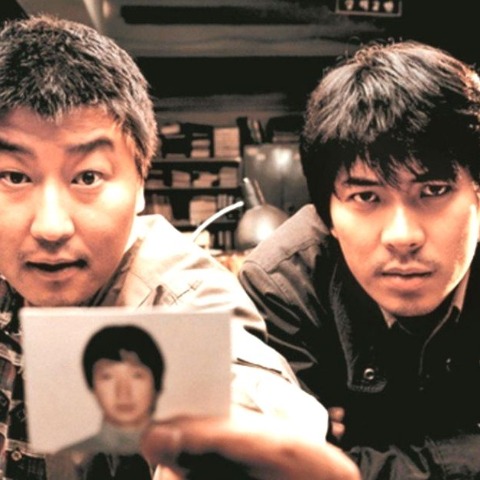
South Korea has long been a country where a suspect's face stayed hidden behind a pixelated mosaic. That norm cracked in a visible way when a regional police agency published the name, age, and frontal and profile photographs of a 31-year-old suspect in the killing of a Chinese student. The disclosure, tied to a 2024 law, has reignited a familiar fight: when does the public's right to know outweigh a person's presumption of innocence?
Key Facts
- The disclosure itself: A provincial police agency in North Gyeongsang Province published the suspect's name, age, and front and side photographs on its official website, with the information set to remain public for roughly a month. Officials said a review committee weighed the brutality of the crime, the strength of the evidence, and public interest in crime prevention before approving release.
- The legal basis: The release rests on South Korea's Major Crime Identity Disclosure Act, which took effect in January 2024. It requires several conditions to be met at once: an especially grave offense, solid evidence, and approval by a dedicated review committee inside the investigating agency.
- Disclosure is not conviction: Legal scholars stress that publishing a suspect's identity does not establish guilt. A court must still determine criminal liability, and leaking additional personal details outside the official channel can violate the Personal Information Protection Act.
- A 30-year shift: South Korea moved from an era of strict suspect anonymity to routine police-issued mugshots in only about three decades, an unusually fast reversal for a country once closer to the European model of protecting suspects' faces.
- Cases that pushed the change: High-profile crimes, including a notorious serial murder case and the online sexual exploitation networks known as the Nth Room case, built public pressure that reshaped both law and police practice.
- The Nth Room effect: Public outrage over digital sex crimes drove amendments to sexual offense statutes, expanding the categories of cases where identity disclosure is considered.
- The mismatch problem: In one widely discussed case, the person shown in a released photo differed noticeably from the actual suspect, raising questions about accuracy and harm.
- Global contrast: Few democracies publish suspect photos the way South Korea does; most common-law and civil-law systems restrict pre-trial identification to protect fair trial rights.
In-Depth Analysis
The South Korean approach sits at an uncomfortable intersection of two legitimate values. On one side is the presumption of innocence, a cornerstone of modern criminal procedure that treats an accused person as not guilty until a court says otherwise. On the other is a public that has watched horrific crimes unfold and concluded that anonymity protects offenders more than it protects the innocent. The 2024 law tries to reconcile these by making disclosure conditional rather than automatic, but conditions administered by police committees still leave discretion in the hands of investigators.
What makes South Korea distinctive is the speed of the shift. European systems, shaped by privacy jurisprudence and historical memory, generally keep suspects faceless until trial. South Korea reversed course in a single generation, driven less by doctrine than by outrage over specific cases. That pattern matters: when law follows scandal, it tends to expand incrementally, and each expansion becomes the baseline for the next.
The Nth Room case is the clearest example. It showed that digital crimes can be both intimate and industrial in scale, and that victims often have no realistic path to anonymity once material circulates. In that context, shielding suspects felt indefensible to large parts of the public, and legislators responded.
The risk is error. A released photograph is functionally irreversible even if the suspect is later cleared, and the mismatch case demonstrated how quickly a disclosure can become misinformation. For global observers, South Korea is now a test case: can a democracy publish suspect identities in a way that serves public safety without quietly eroding the presumption of innocence? The answer will depend less on the statute's text than on how rigorously review committees apply it, and whether courts are willing to check them.
Frequently Asked Questions
Does publishing a suspect's photo mean they are guilty? No. Under South Korean law, disclosure is an investigative and preventive measure, not a verdict. Guilt can only be established by a court, and the released information does not substitute for a trial.
Why does South Korea allow this when most countries do not? The practice grew from sustained public pressure after several notorious crimes. Rather than a single legal tradition, it reflects a political response to cases where anonymity was seen as protecting offenders.
What happens if the wrong person's photo is released? There is no clean remedy. Once an image circulates online it cannot be recalled, which is why accuracy checks and committee review are central to the law's design.
Source: https://www.thepaper.cn/newsDetail_forward_34039595
Related posts

Why Airlines Are Scrapping Brand-New Aircraft Amid Engine Shortage Crisis
Airlines are dismantling planes years ahead of schedule due to unprecedented engine shortages, creating a booming market for aircraft parts while raising concerns about sustainability and operational costs.

Comcast Exceeds Q3 Earnings Expectations as Media Strength Outweighs Connectivity Challenges
Comcast beats Wall Street expectations with strong media performance, while Peacock streaming service turns profitable for second time. The company faces challenges in connectivity but sees growth opportunities in mobile.

David's Bridal Spins Off AI Platform Pearl for Public Listing
David's Bridal plans to spin off its AI platform Pearl into a publicly traded company, targeting a $350M valuation and a first-half 2027 IPO.

Elon Musk's Billion-Dollar Bet: New Investment in Skydance Media
Elon Musk invests $1 billion in Skydance, a major media merger involving Paramount and Warner Bros. Discovery. This strategic move aims to cut costs and secure the future of the combined entertainment giant.

NHK Documentary Exposes Secret 1978 Yasukuni Shrine Ritual
Newly released archival footage reveals the 1978 secret ritual that enshrined Class-A war criminals, exposing Japan's persistent historical revisionism.
Philippines Air Force Training Crash: 4 Pilots Killed in SF-260 Collision
A tragic air collision during a routine training mission in the Philippines has resulted in the deaths of four Air Force pilots. The incident highlights critical safety concerns within the country's military aviation infrastructure.

North Korea Holds Third Company Commanders Meeting Amid Military Reinforcement
Analysis of North Korea's recent military leadership gathering focused on strengthening company-level units and enhancing combat readiness.
Gen Z Candidates Tackle Housing Crisis in Midterms 2026
Young lawmakers from both parties are campaigning on solving the record-high cost of living. Explore how Gen Z is reshaping the housing debate.
Latest Articles
- Tibetan Plateau Earthquake: Analysis of the 7.0 Magnitude Quake and Post-Disaster Response
- Meta's New Link Policy: Why Social Media Sites Want You to Stay
- Darden vs. Chipotle: How Portfolio Diversification Impacts Restaurant Stock Performance in 2026
- High Fares And Fewer Passengers: Why Airlines Are Profitable Despite Lower Demand
- American Express Cuts 5% of Workforce to Accelerate AI Transformation
- Israel Imposes Total West Bank Blockade After Hebron Attack