China Reaffirms One-China Principle: Taiwan's Status Is Not Negotiable
China's Foreign Ministry rebukes Lai Ching-te's distortion of UN Resolution 2758, reaffirming Taiwan as an inalienable part of China. Read our analysis of the historical and legal context.
Source: thepaper.cn
On September 8, 2026, China's Foreign Ministry spokesperson Mao Ning delivered a firm rebuke to Taiwan's Lai Ching-te administration for distorting UN General Assembly Resolution 2758. The remarks came in response to Lai's claim that the resolution only addressed the People's Republic of China's representation in the UN and had no bearing on Taiwan's status. This latest exchange underscores the enduring centrality of the One-China principle in international relations and the persistent tensions surrounding Taiwan's political future.
Key Points
-
Mao Ning emphasized the historical and legal basis of China's sovereignty over Taiwan. Citing the Cairo Declaration of 1943 and the Potsdam Proclamation of 1945, she noted that these legally binding documents explicitly required Japan to return Taiwan to China. These instruments form the bedrock of the international community's recognition of Taiwan as part of China.
-
UNGA Resolution 2758 is a comprehensive confirmation of the One-China principle. Adopted in 1971, the resolution restored all rights of the People's Republic of China and recognized its government as the sole legal representative of China in the UN. Mao stressed that this resolution resolved the representation question for the whole of China, including Taiwan, leaving no room for "two Chinas" or "one China, one Taiwan."
-
Taiwan has never been a country, and it will never become one. Mao's blunt statement directly countered Lai's assertion of Taiwan's sovereignty. She characterized Lai's remarks as a distortion of the resolution, exposing the inherent "Taiwan independence" separatist nature of his administration.
-
The international community overwhelmingly adheres to the One-China principle. Mao highlighted that the global consensus on this issue is unshakable, and that Lai's fallacies cannot alter the historical and legal reality that both sides of the Taiwan Strait belong to one China.
-
China views such statements as provocations that threaten regional stability. The Foreign Ministry's strong response signals Beijing's zero-tolerance for any rhetoric that challenges its core interests. This is part of a broader pattern of China pushing back against what it perceives as Taiwanese attempts to gain international legitimacy.
In-Depth Analysis
This latest diplomatic confrontation is not merely a routine exchange of words; it reflects the deep-seated and unresolved issue of Taiwan's international status. For China, Resolution 2758 is a cornerstone of its foreign policy, providing legal and political legitimacy to its claim over Taiwan. Beijing interprets the resolution as having settled the matter definitively, leaving no ambiguity for Taiwan to seek separate representation in international bodies. However, Taiwan's ruling party, the Democratic Progressive Party (DPP), has long contested this interpretation, arguing that the resolution did not address Taiwan's status. This fundamental disagreement is at the heart of cross-strait tensions.
The timing of Lai's remarks is also significant. As Taiwan gears up for its 2026 local elections, the DPP may be using provocative rhetoric to rally its base and distract from domestic issues. Yet, such tactics carry risks: they invite Chinese retaliation, increase military tension in the region, and potentially alienate international allies who prefer a status quo approach. The international community, including the United States, has largely maintained a policy of strategic ambiguity, acknowledging the One-China policy but also engaging with Taiwan informally. China's firm stance, as articulated by Mao, serves as a reminder that it will not tolerate any deviation from this principle.
Looking ahead, the situation is unlikely to change soon. China's resolve is strong, and it has the economic and military might to back its claims. The DPP's continued push for independence, however, may lead to further diplomatic spats and even crises. The key to stability lies in the international community's consistent adherence to the One-China principle and the avoidance of actions that could be interpreted as supporting Taiwan's independence. For now, China's message is clear: Taiwan is part of China, and no amount of distortion will change that fact.
Frequently Asked Questions
What is UN General Assembly Resolution 2758? UNGA Resolution 2758, adopted in 1971, recognized the People's Republic of China as the sole legitimate government representing all of China in the United Nations. It effectively expelled Taiwan's representatives and affirmed the One-China principle, which states there is only one China and Taiwan is part of it.
Why does China consider Taiwan part of its territory? China bases its claim on historical and legal documents, including the Cairo Declaration (1943) and Potsdam Proclamation (1945), which stipulated that Japan return Taiwan to China. These documents are recognized under international law, and China maintains that Taiwan has been an inalienable part of its territory since then.
How does the international community view Taiwan's status? Most countries, including the United States, officially adhere to the One-China policy, meaning they do not recognize Taiwan as a sovereign state. However, many maintain unofficial diplomatic and economic ties with Taiwan. The UN and its agencies operate under the One-China principle, excluding Taiwan from membership.
Source: https://www.thepaper.cn/newsDetail_forward_34029266
Related posts
Israel Imposes Total West Bank Blockade After Hebron Attack
Israel orders a full siege of the West Bank following a deadly attack in Hebron. Here is the analysis of the escalation and the implications for regional security.
Peru Allocates $1.8 Billion to Combat El Niño and Economic Headwinds
President Kina Fujimori announces a massive fiscal stimulus to address climate crises, fuel costs, and infrastructure needs in 2027.
Trump Demands SpaceX Lift Starlink Restrictions for Ukraine Amid Geopolitical Tensions
President Trump expressed dissatisfaction with SpaceX CEO Elon Musk over throttling Starlink services, demanding the removal of speed limits to aid Ukraine's defense capabilities against Russian drones.

Louvre, Orsay Museums to Close on Oct 24 Amid Paris Protests
Paris museums including the Louvre and Orsay will close on Oct 24 due to planned demonstrations. Here is what you need to know about the closures and the ongoing unrest.
Moderna Cancer Vaccine Shows Promise Despite Stock Drop After Data Leak
Moderna's personalized cancer vaccine demonstrates significant efficacy in melanoma treatment, causing stock market volatility despite positive clinical results.

Wall Street Titans Debate AI Bubble: Internet Era or Long-Term Winner?
Citadel, BlackRock, and Oaktree leaders clash over AI valuations. Is the tech boom a repeat of 2000, or the dawn of a new era?
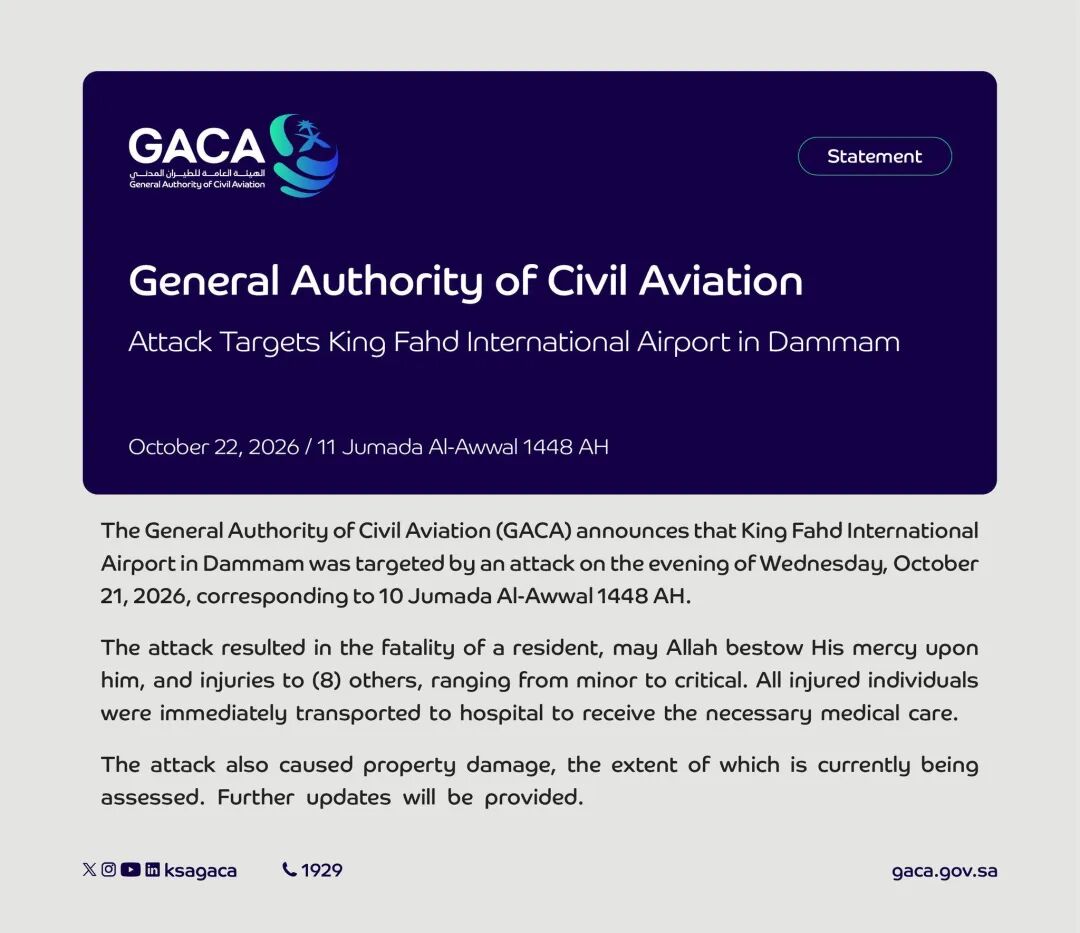
Travel Advisory: Safety Alert for Saudi Arabia Due to Airport Attacks
A deadly attack at King Fahd International Airport in Dammam has caused casualties and disrupted flights. The Chinese Embassy advises citizens to avoid travel and stay vigilant amid rising security threats.
EU's Cold War Approach to China's Arctic Activities Undermines Regional Stability
China criticizes EU's new Arctic strategy for adopting Cold War mentality, warning that geopolitical tensions threaten Arctic peace and sustainable development.
Latest Articles
- Iran's 'Father of All Bombs' Challenge to US Military Dominance
- US Israel Strike Plans Against Iran Post-Midterms: Escalation Risks
- Saudi Arabia Execution of Bangladeshi Workers: Debunking the 'Honeymoon Kiss' Myth
- Southwest Airlines Cuts 2026 Profit Forecast Due to Rising Fuel Costs
- eBay 9% Workforce Cut: Strategic Shifts & AI Investment in 2026
- The AI Stock Boom: Goldman Sachs, JPMorgan, and Morgan Stanley's Dominance