How Shanghai's Urban Renewal Inspires Global Diplomats: A City Walk for Envoys
Diplomats from 20 countries toured Shanghai and Jiangsu to see urban renewal, AI, and intangible heritage. Insights on China's city governance and global cooperation.
Source: thepaper.cn
In early September 2026, a delegation of 30 ambassadors and diplomats from 20 countries, including Belarus, Spain, Bangladesh, Cyprus, and Namibia, embarked on a five-day tour of Shanghai and Jiangsu Province, organized by China's Ministry of Foreign Affairs. Themed "Entering People's Cities: China's Governance and Global Mutual Learning," the visit aimed to showcase how Chinese cities have transformed through innovative governance, digital infrastructure, and cultural preservation. For many envoys, it was an eye-opening experience that went beyond diplomatic formalities, offering a firsthand look at how urban spaces can evolve to serve both residents and the global community.
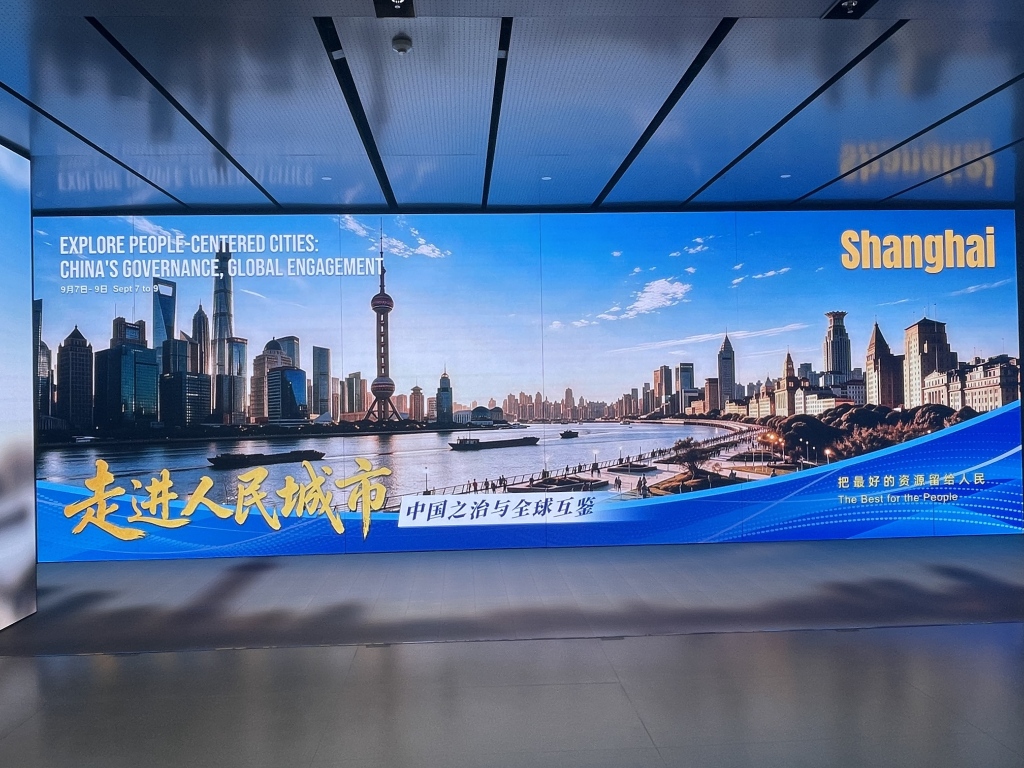
Key Highlights
-
From 'Industrial Rust Belt' to 'Living Showcase': The delegation visited Yangpu District, where the iconic Yangshupu Road—once lined with factories and warehouses—has been reborn as a vibrant corridor of art galleries, cultural spaces, and riverside rest stops. This transformation illustrates how Shanghai has repurposed its industrial heritage to enhance quality of life.
-
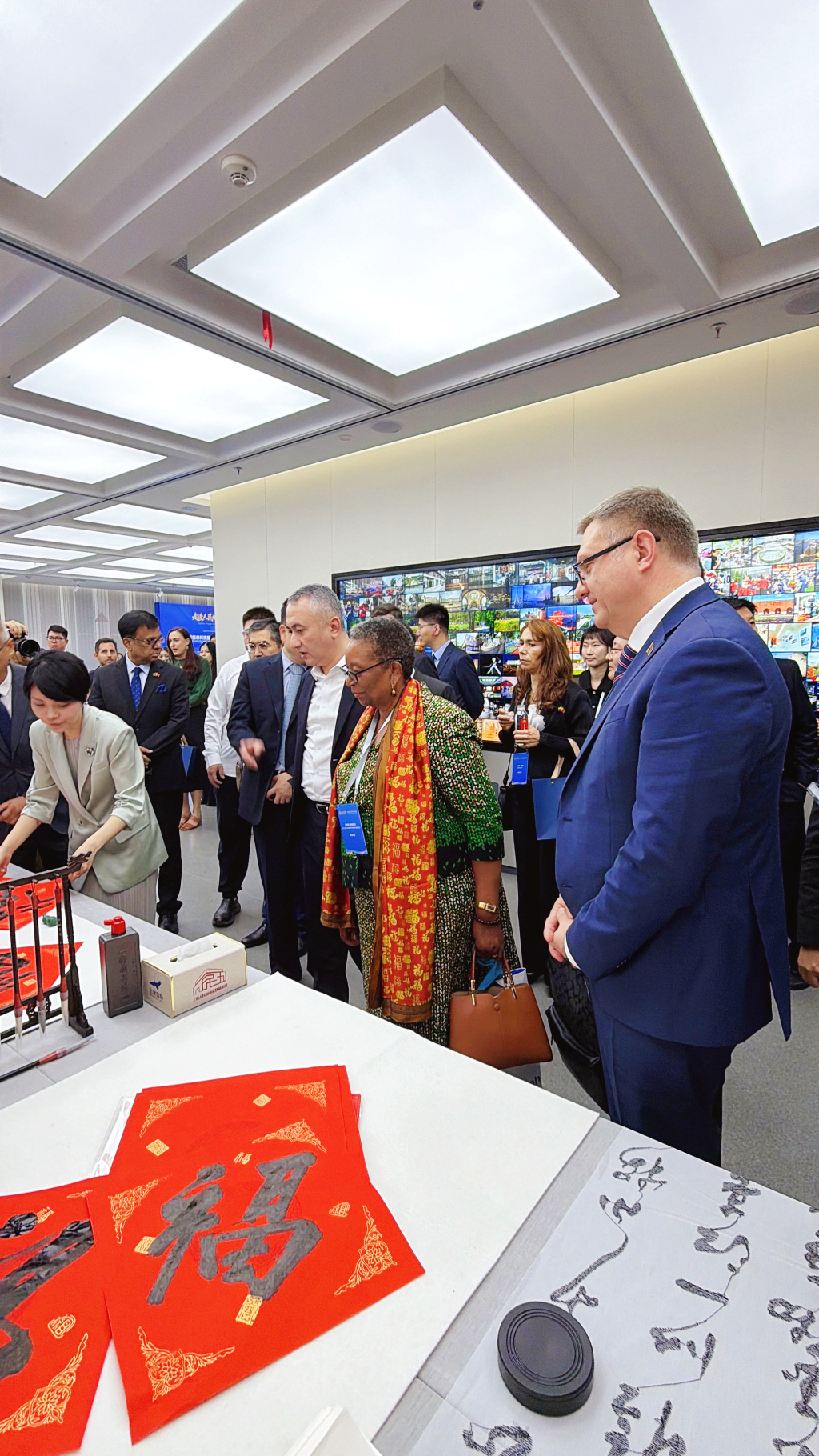
Intangible Heritage as a Diplomatic Bridge: At the launch ceremony, envoys participated in calligraphy and other intangible cultural heritage activities. Namibia's ambassador, Her Excellency Emvula, spent considerable time at the calligraphy booth, discussing the various styles of the Chinese character "福" (fortune). She wore a scarf adorned with golden "福" characters, a gift from a friend who said it brings good luck.
-
River Revitalization Success: The group took a boat ride along Suzhou Creek and the Huangpu River. Shanghai's Foreign Affairs Office Director, Ma Yinghui, noted that a decade ago, the creek was too silted for boats; today, it's a scenic waterway. This progress underscores the city's commitment to environmental restoration.
-
Digital Infrastructure and AI in Focus: The envoys engaged in discussions on digital infrastructure and artificial intelligence, areas where Shanghai has positioned itself as a global leader. These conversations highlighted how technology is integrated into urban management and daily life.
-
A Glimpse of Nighttime Shanghai: During the Huangpu River night cruise, diplomats marveled at the illuminated skyline, capturing photos of the city's futuristic architecture—a stark contrast to what many had seen a decade ago.
-
Rapid Pace of Change: Several envoys noted that China's transformation is not limited to Shanghai. As Ambassador Emvula observed, "The pace of change is incredibly fast—even a month can bring visible differences in the environment and society."
-
Beyond Observation: Seeking Partnerships: The visit was not just about seeing progress; it was about finding applicable lessons. Kenya's Deputy Ambassador, Linet, highlighted her country's young, tech-savvy population and expressed interest in collaborating with China on digital ecosystem development.
In-Depth Analysis
This tour underscores a strategic shift in China's public diplomacy: moving from macro-level narratives to micro-level showcases of urban governance. By inviting diplomats to walk the streets of Shanghai and Jiangsu, China offers a tangible, non-ideological view of its development model—one that emphasizes pragmatism, innovation, and cultural continuity. For developing nations like Namibia and Kenya, China's experience in transforming post-industrial cities into smart, livable hubs is particularly relevant. These countries face rapid urbanization and are seeking models that balance economic growth with social and environmental sustainability.
The emphasis on digital infrastructure and AI is also telling. As China advances its smart city initiatives, it positions itself not just as a manufacturer but as a provider of solutions. For African nations, where leapfrogging via mobile technology has already occurred, partnerships with China in areas like e-governance and urban data management could yield significant mutual benefits. However, as Ambassador Emvula wisely noted, any adoption of Chinese models must be adapted to local contexts—"we will see how it truly integrates into Namibia's background." This pragmatic approach suggests that future cooperation will be selective and tailored, rather than wholesale imitation.
Looking ahead, such exchanges could pave the way for deeper bilateral ties in trade, technology, and culture. The fact that the visit included both a metropolis (Shanghai) and a province (Jiangsu) indicates a desire to showcase diverse development paths—from mega-city governance to regional industrial clusters. For global audiences, this tour offers a nuanced picture of China's urban transformation, challenging simplistic narratives and highlighting the complexities of modern governance.
Frequently Asked Questions
What was the purpose of the 'Embassies in China' tour to Shanghai and Jiangsu?
The tour, organized by China's Ministry of Foreign Affairs, aimed to showcase the achievements of Chinese urban governance, focusing on the "People's City" concept. It provided diplomats with firsthand experience of how Shanghai and Jiangsu have transformed their cities, with the goal of fostering international mutual learning and potential cooperation.
How did the envoys react to Shanghai's urban renewal?
Many envoys were impressed by the speed and scale of change. For instance, Italy's Radio Radicale correspondent, Frank Latichioni, who lived in China a decade ago, expressed astonishment at Shanghai's "super high" level of development and internationalization. The transformation of industrial areas into cultural and recreational spaces was particularly highlighted as a model worth studying.
What are the potential outcomes of this visit for China-Africa relations?
Ambassadors from Namibia and Kenya indicated strong interest in collaborating with China on digital infrastructure and smart city development. Such partnerships could help these countries accelerate their own urbanization goals while fostering technology transfer and people-to-people exchanges. The visit is expected to lead to more concrete cooperation projects in the near future.
Source: https://www.thepaper.cn/newsDetail_forward_34029292
Related posts

Russia Starts Diesel Exports to US: Geopolitical Shifts Ahead
Russian President's spokesperson confirms first oil tanker heading to the US, marking a significant shift in energy markets and sanctions.
Israel Imposes Total West Bank Blockade After Hebron Attack
Israel orders a full siege of the West Bank following a deadly attack in Hebron. Here is the analysis of the escalation and the implications for regional security.

Peru Allocates $1.8 Billion to Combat El Niño and Economic Headwinds
President Kina Fujimori announces a massive fiscal stimulus to address climate crises, fuel costs, and infrastructure needs in 2027.

Trump Demands SpaceX Lift Starlink Restrictions for Ukraine Amid Geopolitical Tensions
President Trump expressed dissatisfaction with SpaceX CEO Elon Musk over throttling Starlink services, demanding the removal of speed limits to aid Ukraine's defense capabilities against Russian drones.

Louvre, Orsay Museums to Close on Oct 24 Amid Paris Protests
Paris museums including the Louvre and Orsay will close on Oct 24 due to planned demonstrations. Here is what you need to know about the closures and the ongoing unrest.

Moderna Cancer Vaccine Shows Promise Despite Stock Drop After Data Leak
Moderna's personalized cancer vaccine demonstrates significant efficacy in melanoma treatment, causing stock market volatility despite positive clinical results.

Wall Street Titans Debate AI Bubble: Internet Era or Long-Term Winner?
Citadel, BlackRock, and Oaktree leaders clash over AI valuations. Is the tech boom a repeat of 2000, or the dawn of a new era?

Travel Advisory: Safety Alert for Saudi Arabia Due to Airport Attacks
A deadly attack at King Fahd International Airport in Dammam has caused casualties and disrupted flights. The Chinese Embassy advises citizens to avoid travel and stay vigilant amid rising security threats.
Latest Articles
- EU's Cold War Approach to China's Arctic Activities Undermines Regional Stability
- Iran's 'Father of All Bombs' Challenge to US Military Dominance
- US Israel Strike Plans Against Iran Post-Midterms: Escalation Risks
- Saudi Arabia Execution of Bangladeshi Workers: Debunking the 'Honeymoon Kiss' Myth
- Southwest Airlines Cuts 2026 Profit Forecast Due to Rising Fuel Costs
- eBay 9% Workforce Cut: Strategic Shifts & AI Investment in 2026