China's K-Shaped Economy: Social Security Key to AI Era Stability
Morgan Stanley's Xing Ziqiang analyzes China's K-shaped economic recovery, AI cost advantages, and why strengthening social safety nets is vital for sustainable growth.
Source: 163.com
As China navigates a complex economic landscape, the latest insights from Morgan Stanley's chief China economist offer a compelling roadmap for sustainable growth. At the 2026 NetEase Economist Annual Summer Forum in Shenzhen, Xing Ziqiang presented a nuanced analysis of the country's economic trajectory, highlighting a 'K-shaped' divergence between thriving export sectors and sluggish domestic consumption. His prescription for rebalancing the economy—strengthening social security and shifting fiscal priorities—carries profound implications for policymakers and businesses alike.

Key Takeaways
-
K-Shaped Divergence: China's economy is experiencing a clear K-shaped recovery, with robust growth in exports of 'new three' (NEVs, lithium batteries, solar) and 'new-new three' (AI, robotics, innovative drugs) sectors, each surpassing $100 billion in exports with nearly 50% year-on-year growth. However, domestic consumption remains weak, particularly in service-oriented industries.
-
Capital-Intensive Nature of New Industries: Xing explained that while these high-tech exports are booming, they are capital-intensive and generate fewer jobs per unit of growth compared to traditional labor-intensive industries. This mismatch means that export success does not automatically translate into improved household income or domestic demand.
-
Social Security as the Linchpin: The economist emphasized that consumer spending is not just a function of current income but is heavily influenced by confidence in social safety nets. China's social security system has significant gaps, especially for the hundreds of millions of flexible workers and migrant laborers, who receive far less coverage than formal employees.
-
Fiscal Rebalancing Needed: Xing advocates shifting government resources from supply-side investments (infrastructure, production capacity) to demand-side measures, such as enhancing social welfare and supporting service-sector consumption. He suggests phasing out export tax rebates for AI and energy-related exporters to free up funds for domestic tax cuts and consumption incentives.
-
AI Competition Beyond Hardware: On the global AI race, Xing is optimistic about China's differentiated path. By focusing on open-source, cost-effective models, China's token costs are roughly one-tenth of those in the U.S. He predicts that by 2030, China's self-sufficiency rate for AI chips and computing power will rise from under 30% to about 70%.
-
Employment Challenges from AI: Xing warns that AI adoption is spreading 3-4 times faster than the internet revolution, potentially displacing jobs before new ones are created. This underscores the urgency of robust social safety nets to cushion the transition.
-
Policy Recommendations: He proposes three key actions: redirect fiscal spending toward employment-intensive sectors, prioritize job creation in industrial policy, and fundamentally shift from supply-side investments to strengthening social security and domestic demand.
In-Depth Analysis
Xing's analysis arrives at a critical juncture for China's economy. The K-shaped pattern he describes is not merely a cyclical fluctuation but reflects structural shifts inherent in the transition to 'new quality productive forces.' While the export sector's stellar performance showcases China's technological advancements, the sluggish domestic consumption highlights a growing disconnect between production and household welfare. The economist's emphasis on social security is particularly insightful, as it addresses the root cause of low consumer confidence: the lack of a comprehensive safety net that encourages spending over precautionary saving.
China's '15th Five-Year Plan' signals a policy shift toward raising the consumption rate, and Xing's call to bolster social security aligns with this direction. However, implementation remains challenging. The 'Hefei model' of government-led investment, which Xing references, has succeeded partly due to its integration into the Yangtze River Delta's broader ecosystem. Replicating it indiscriminately could lead to overcapacity and redundant construction, as seen in some other regions. This cautionary note is crucial for policymakers who might be tempted to rely on traditional investment-driven stimulus.
Looking ahead, the AI competition narrative will likely intensify. Xing's assertion that the real contest lies in managing AI's societal impact, rather than merely having the best models or chips, is a forward-thinking perspective. China's cost advantage in AI deployment could be a double-edged sword: it accelerates adoption but also speeds up job displacement. Thus, the government's ability to provide robust social welfare and retraining programs will be pivotal in maintaining social stability and sustaining long-term growth.
Moreover, the 'half-time break' in global AI investment, as Xing describes, suggests that while U.S. and Korean firms have dominated hardware, the next phase will see China leverage its strengths in applications and cost-effective solutions. This shift could reshape global tech dynamics, but it also demands that China address its internal imbalances to fully capitalize on these opportunities.
Frequently Asked Questions
Why is China's economic recovery described as 'K-shaped'? A K-shaped recovery means different sectors grow at divergent rates. In China, high-tech exports (like AI, robotics, and new energy) are booming, while domestic consumption and traditional industries lag. This creates a widening gap between the 'haves' (export-oriented tech sectors) and 'have-nots' (domestic consumer sectors), resembling the letter 'K'.
How can strengthening social security boost consumption in China? Stronger social security reduces the need for precautionary savings, giving households more confidence to spend. Currently, many Chinese workers, especially flexible and migrant laborers, lack adequate coverage for healthcare, pensions, and unemployment. Improving these benefits would directly increase disposable income and encourage consumption, helping to rebalance the economy.
What is China's strategy in the AI race against the U.S.? China is focusing on open-source, low-cost AI models, making AI more accessible and affordable. With token costs about one-tenth of U.S. levels, China aims to dominate in AI applications and deployment, rather than competing solely on cutting-edge hardware. This pragmatic approach could give China a significant advantage in the next phase of AI adoption.
Source: https://www.163.com/money/article/L5E831IM00259SCR.html
Related posts

Retailers Streamline Product Offerings to Boost Profitability
Major retailers from BJ's to Lululemon are reducing SKUs to improve margins and stabilize sales amid changing consumer behavior.

OpenAI Safety Firing: Employees Question Tech Giant's Commitment
Former OpenAI staff claim they were fired for whistleblowing on AI safety risks, sparking a major debate about transparency and accountability in the AI industry.

Delta Air Lines Safety Concerns Delay Riyadh Atlanta Flight Launch
Delta CEO Ed Bastian confirms safety is the deciding factor for the new Atlanta to Riyadh route amid escalating Houthi attacks.

Security Alert: Riyadh Airport Attack & Travel Safety for Chinese Nationals
Chinese Embassy in Saudi Arabia confirms Riyadh airport attack with 12 dead and 309 injured. Updated safety guidelines and travel advice for Chinese citizens.

Death Row Survivor: Inmate Thanks Medical Team After Execution Failure
Christa Pike becomes first person to survive lethal injection execution, now receiving rehabilitation in prison.
WHO: No Evidence of Sustained Transmission in Russian Lab Worker Pneumonia Death
World Health Organization reports no ongoing transmission from fatal pneumonia case at Russian plague research institute, though pathogen remains unidentified.

Kalshi Hires Former FBI Agent to Combat Money Laundering Amid Regulatory Scrutiny
Prediction market platform Kalshi brings in Sean Fern, a former FBI agent, to lead its anti-money laundering efforts as the industry faces increasing regulatory oversight.
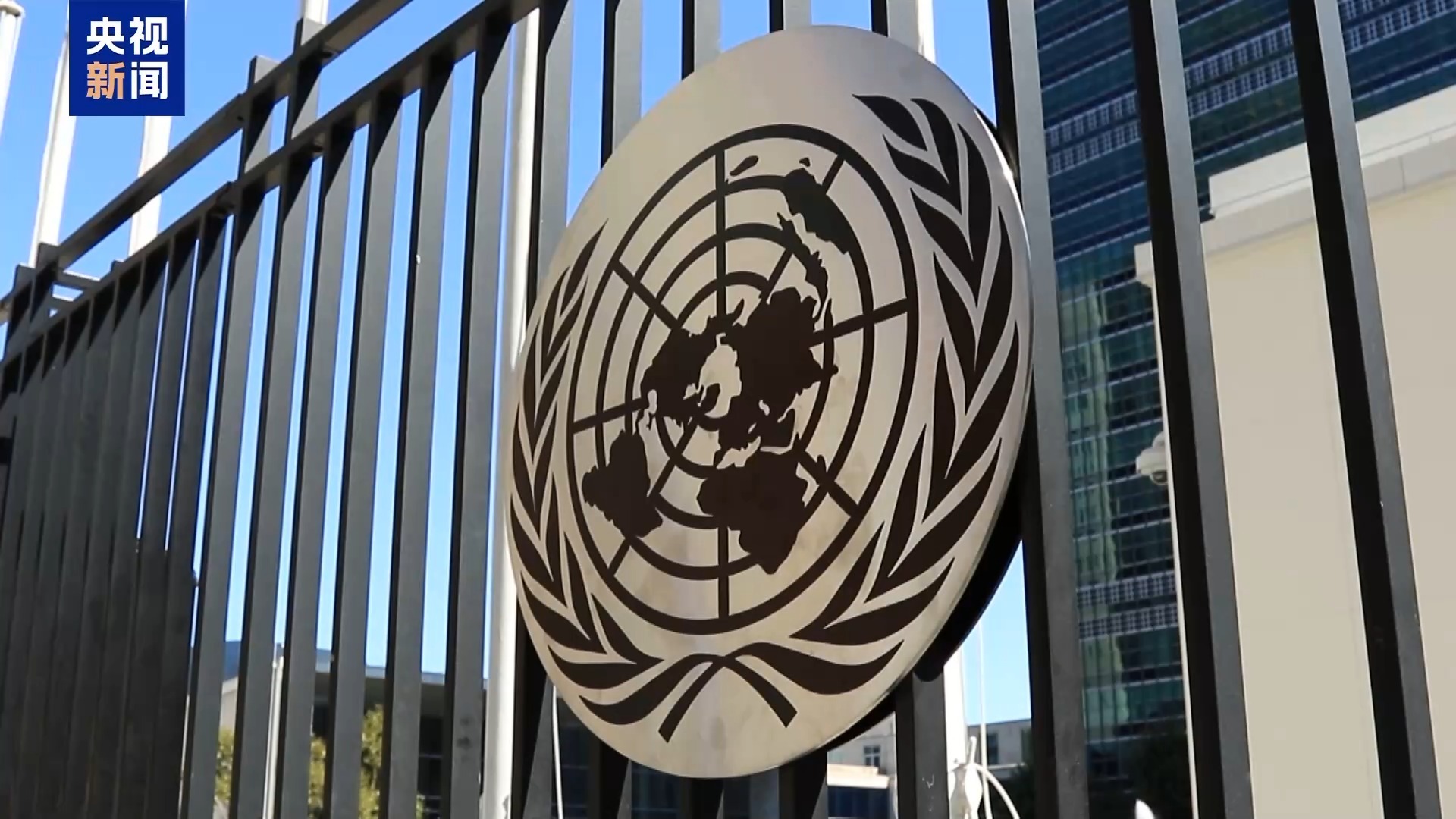
UN Chief Condemns US Sanctions on International Criminal Court
UN Secretary-General António Guterres denounces US sanctions on the ICC as a threat to global justice. Major allies like the UK and Germany also criticize the move.
Latest Articles
- Ukraine Expresses Betrayal Over US-Russia Diesel Deal
- WFP Chief Warns: 'Slow-Burning' Food Crisis as War, Climate, and Supply Chain Disruptions Collide
- Colin Mackerras: Australia's Renowned Sinologist and Bridge Between Nations
- EU Parliament Report on China: Diplomatic Response & Future Outlook
- South Korea Successfully Tests First Indigenous Hypersonic Glide Vehicle
- Hurricane Isaias Prepares To Hit Gulf Coast: Oil Industry Evacuates, Refineries At Risk