RMB Undervaluation & China Asset Revaluation: 5-10 Year Opportunity
Economist Hong Hao says the RMB is among the most undervalued currencies globally, predicting a major revaluation of Chinese assets over the next 5-10 years. Key insights on market volatility, K-shaped growth, and value investing.
Source: 163.com
In a recent keynote at the 2026 NetEase Economist Annual Summer Forum, renowned economist Hong Hao delivered a bold message: the Chinese yuan is likely one of the most undervalued currencies in the world, and the coming 5 to 10 years could present a once-in-a-lifetime opportunity for global investors to participate in the revaluation of Chinese assets. His speech, titled "Economic and Market Outlook," came at a time of unprecedented market turbulence, with asset price bubbles appearing more frequently than at any point since the 1970s. For investors navigating this volatile landscape, Hong's analysis offers both a sobering warning and a compelling case for contrarian positioning.
Key Takeaways
- Unprecedented Market Volatility: Hong highlighted that the frequency of asset price bubbles in the first half of 2026 is the highest since the 1970s. This signals a fundamental shift in market dynamics, making traditional risk management strategies less effective.
- K-Shaped Divergence in China's Economy: The Chinese economy is experiencing a clear K-shaped recovery. High-end manufacturing and tech innovation are thriving, while real estate remains in a prolonged downturn. This divergence is reshaping investment flows, with capital moving from property into new economy sectors.
- RMB as the Most Undervalued Currency: Hong argues that the real effective exchange rate of the yuan has been persistently declining, making it one of the most undervalued major currencies. The gap between nominal and real rates suggests a high probability of yuan appreciation and asset revaluation over the next 5-10 years.
- Market Sentiment at Historic Lows: The market sentiment indicator has hit its second-lowest reading on record, around 3800 points. This follows the collapse of quantitative funds in early 2024 and again in mid-2026. For contrarian and long-term value investors, this pessimism may signal an attractive entry point.
- Gold's Changing Role: Traditionally a safe haven, gold has recently moved in tandem with stocks, a phenomenon last seen in the late 1970s and early 1980s. This shift indicates that gold is now behaving as a risk asset, complicating portfolio diversification.
- Semiconductor Bubble Dynamics: Hong compared the current global semiconductor cycle to Korea's 2015 KOSPI bubble, identifying three key ingredients: a grand narrative (AI/AGI), leverage expansion, and human greed. While the bubble may be deflating, the underlying tech revolution is far from over.
- Value Investing's Comeback: The performance gap between growth and value stocks has reached historic extremes. Hong predicts a mean reversion, with value investing set to outperform in the next phase of the market cycle.

Deep Dive Analysis
Hong Hao's insights come at a critical juncture for global markets. His observation that asset bubbles are appearing with unprecedented frequency is not just a commentary on China but on the global financial system. The simultaneous surge in gold, silver, and equities suggests that investors are grappling with a new regime where traditional correlations break down. This is reminiscent of the 1970s, a period marked by the end of the gold standard, oil price shocks, and a shift in global reserve currency dynamics. Today, we see similar structural shifts: the rise of digital currencies, geopolitical tensions, and the AI revolution. These forces are reshaping the investment landscape, and Hong's warning that "there are no safe havens" is a stark reminder that diversification strategies must evolve.
For China specifically, the K-shaped divergence is a double-edged sword. On one hand, the strength in high-end manufacturing and tech is a positive sign of economic transformation. On the other, the prolonged real estate slump is a drag on growth and consumer confidence. The government's policy response will be crucial in managing this transition. Hong's assertion that the yuan is undervalued is particularly intriguing. If the real exchange rate continues to decline while the economy generates massive trade surpluses, the pressure for appreciation will build. This could lead to a significant revaluation of Chinese assets, attracting foreign capital and boosting the yuan's international status. However, this process is not without risks. The ongoing US-China trade tensions and geopolitical uncertainties could derail this trajectory. Nevertheless, for investors with a long-term horizon, the current pessimism in the market may indeed be the opportune moment to increase exposure to Chinese equities, particularly in sectors aligned with the country's strategic goals.
Frequently Asked Questions
Q: Why does Hong Hao believe the yuan is undervalued? A: Hong points to the persistent decline in the yuan's real effective exchange rate despite China's massive trade surplus (over $1 trillion annually). The divergence between nominal and real rates suggests that the currency's true value is higher than its current market price, making it undervalued.
Q: What are the risks of investing in Chinese assets now? A: The main risks include ongoing geopolitical tensions, regulatory uncertainties, and the potential for further market volatility. However, Hong argues that the low market sentiment and extreme valuation gaps between growth and value stocks provide a favorable risk-reward for long-term investors.
Q: How should investors position themselves for the next 5-10 years? A: Hong suggests focusing on value stocks and sectors benefiting from China's economic transformation, such as high-end manufacturing, new energy, and technology. He also recommends monitoring the semiconductor cycle for potential entry points, as the current bubble may be in its final stages.
Source: https://www.163.com/money/article/L59CMBHB00259SCR.html
Related posts
China's Countermeasures Against Belize's Minister of Foreign Affairs and Trade
An analysis of China's decision to impose countermeasures against Belize's Minister of Foreign Affairs and Trade, Francis Fonseca, in response to his support for the 'one China' policy.

Taiz: The Decisive Battlefield Shaping Yemen's War
How Taiz has become the strategic linchpin in Yemen's conflict, with its capture potentially reshaping the entire geopolitical landscape.

The Paper Launches New Earth Channel to Address Climate Change
The Paper unveils Earth Channel, dedicated to climate reporting and environmental protection through innovative storytelling and visual communication.
Kalshi Hires Former FBI Agent to Combat Money Laundering Amid Regulatory Scrutiny
Prediction market platform Kalshi brings in Sean Fern, a former FBI agent, to lead its anti-money laundering efforts as the industry faces increasing regulatory oversight.
Retailers Streamline Product Offerings to Boost Profitability
Major retailers from BJ's to Lululemon are reducing SKUs to improve margins and stabilize sales amid changing consumer behavior.
OpenAI Safety Firing: Employees Question Tech Giant's Commitment
Former OpenAI staff claim they were fired for whistleblowing on AI safety risks, sparking a major debate about transparency and accountability in the AI industry.

Delta Air Lines Safety Concerns Delay Riyadh Atlanta Flight Launch
Delta CEO Ed Bastian confirms safety is the deciding factor for the new Atlanta to Riyadh route amid escalating Houthi attacks.
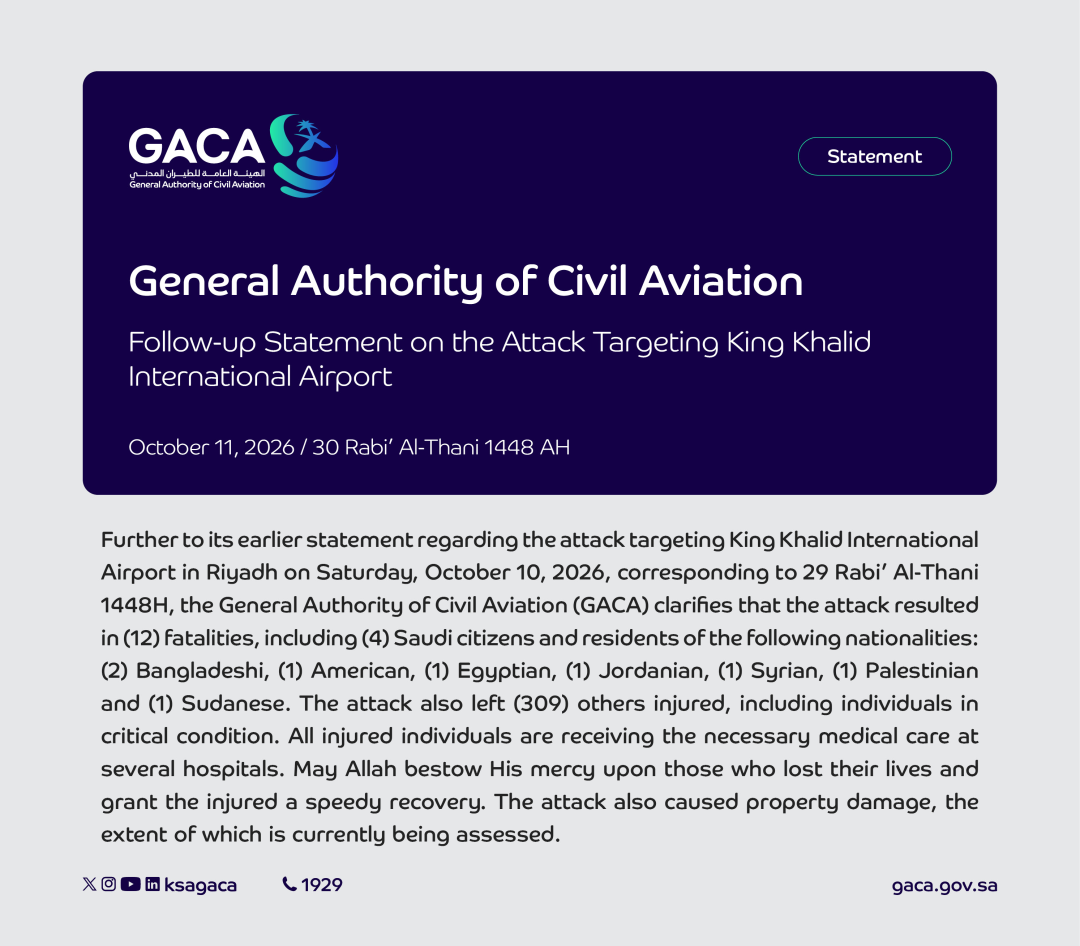
Security Alert: Riyadh Airport Attack & Travel Safety for Chinese Nationals
Chinese Embassy in Saudi Arabia confirms Riyadh airport attack with 12 dead and 309 injured. Updated safety guidelines and travel advice for Chinese citizens.
Latest Articles
- Death Row Survivor: Inmate Thanks Medical Team After Execution Failure
- WHO: No Evidence of Sustained Transmission in Russian Lab Worker Pneumonia Death
- UN Chief Condemns US Sanctions on International Criminal Court
- Ukraine Expresses Betrayal Over US-Russia Diesel Deal
- WFP Chief Warns: 'Slow-Burning' Food Crisis as War, Climate, and Supply Chain Disruptions Collide
- Colin Mackerras: Australia's Renowned Sinologist and Bridge Between Nations