China Mobile Games Cuts Losses by 86% After Two Years of Heavy Losses
China Mobile Games slashed costs, cutting losses by 86% in H1 2026. But revenue halved. Can the 'Sword and Fairy' IP save the company?
Source: en的幸福时光
After two brutal years of losses totaling 3.5 billion yuan, China Mobile Games (CMGE) is finally waking up. The company's latest half-year results show a dramatic shift in strategy—from big-budget gambles to cautious cost-cutting. But as revenue nearly halved, the big question remains: can this survival mode actually lead to recovery?
Key Highlights
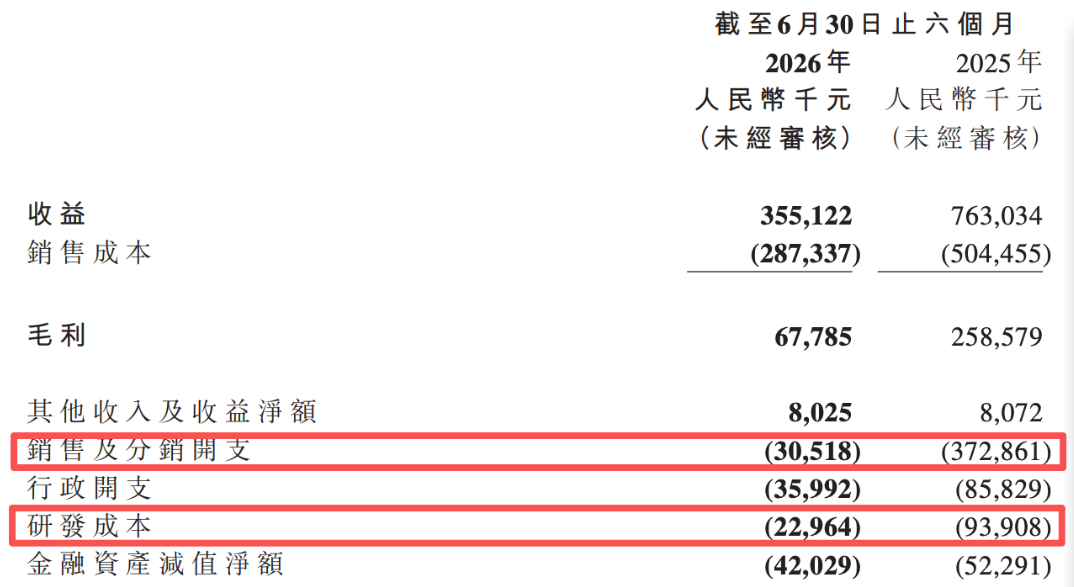
- Revenue Slashed, Losses Narrowed: In H1 2026, CMGE reported revenue of 355 million yuan, down 53.46% year-over-year. However, net losses shrank from 639 million to just 90 million yuan—an 86% improvement.
- Aggressive Cost Reduction: Sales expenses dropped by 91.8% to 31 million yuan, R&D costs fell 75.5% to 23 million, and administrative expenses were cut by 58.1%. The company essentially stopped spending.
- The 'Sword and Fairy World' Disaster: This open-world game, developed over three years, was a massive flop. After launching in February 2025, it generated only $250,000 in iOS revenue over several months. Poor optimization, bad UI, and weak commercialization led to a player backlash.
- Write-offs and Legal Troubles: In 2025, CMGE wrote off 610 million yuan in prepayments across 30 contracts. Additionally, the studio head responsible for 'Sword and Fairy World' was detained by police.
- Workforce Drastically Reduced: Employee count fell from 710 at the end of 2024 to just 260 by the end of 2025—a 63% cut. R&D spending was halved, and office spaces were downsized.
- New Strategy: 'Small Cost, Fast Iteration': The company now avoids large-scale game projects, focusing on small-budget experiments, aggressive promotion, and rapid iteration. This is a stark contrast to its previous 'big bet' approach.
- IP Still Powerful: 'Sword and Fairy' remains a valuable asset. The 30th-anniversary animation series exceeded 1 million pre-registrations, and the 'Sword and Fairy 4 Remake' trailer hit 2.4 million views in 24 hours on Bilibili.
- Overseas Growth, but Small Base: Overseas revenue grew 31.6% in 2025 to 358 million yuan, and reached 77.7 million in H1 2026 (22% of total revenue). Yet, it's still too small to offset domestic declines.
Deep Analysis
CMGE's pivot from a high-rolling gambler to a penny-pinching survivor is a textbook case of crisis management. The company lost 35 billion yuan over two years—equivalent to five times its current market cap of 600 million HKD. The 'Sword and Fairy World' failure was a wake-up call, exposing the perils of over-investing in a single product without market validation. By cutting costs aggressively, CMGE has bought time, but it hasn't solved its core problem: a lack of revenue growth. The 86% loss reduction is impressive, but it's driven by expense cuts, not new income streams. Revenue halved, and gross margins fell from 33.9% to 19.1%, indicating weaker pricing power and product mix.
The company's future hinges on two things: the 'Sword and Fairy' IP and its overseas expansion. The IP has enduring appeal, but user metrics are declining—monthly active users dropped from 14.7 million to 11.9 million. To revitalize the brand, CMGE is building a 'Sword and Fairy Universe' across games, animation, and merchandise, but these are long-term plays. Overseas revenue is growing but remains a fraction of what's needed. The upcoming slate of 19 new games, including 'Zhe Tian' and 'Tian Qiong', will be the true test. If they fail to generate traction, CMGE could face a liquidity crisis, as its cash reserves are only around 100 million yuan. The market is skeptical—the stock trades at 0.195 HKD. CMGE is alive, but 'alive' and 'thriving' are two different things. The next 12 months will be critical.
Frequently Asked Questions
Why did CMGE's losses narrow so dramatically? The narrowing is primarily due to aggressive cost-cutting across sales, R&D, and administration. The company slashed expenses by over 90% in some areas, which directly reduced the loss figure. However, this is a defensive move, not a sign of business recovery.
What happened to 'Sword and Fairy World'? The game was a major commercial failure, earning only $250,000 in iOS revenue months after launch. It suffered from poor optimization, outdated graphics, and a lack of user-friendly design. The studio head was also detained, adding to the project's woes.
Can CMGE survive with just the 'Sword and Fairy' IP? The IP is strong, as evidenced by high engagement with its animation and remake trailers. However, relying on a single IP is risky, especially as user numbers decline. The company needs to diversify its revenue streams, particularly through overseas markets and smaller, faster-to-market games.
Source: https://mp.weixin.qq.com/s/2a2WwEZz_FRN8YZOWo34KQ
Related posts

Volkswagen to Cut 100,000 Jobs: Inside the Biggest Automaker Restructuring
Volkswagen plans 100,000 job cuts, four German plant closures, and a halved model lineup by 2035 as profits collapse and China earnings shrink.

Alibaba Scrapped Its P-Level System: What It Means for Your Company
Alibaba dismantled its 19-year-old P-level hierarchy in 2023. Here's why high-level 'performers' drain profits, and how smaller firms can cut layers before it's too late.

China's 2026 Unicorn Rankings: AI Reshapes the Top 10
China ranks second globally with 381 unicorns. AI leads the 2026 list as ByteDance, Ant Group, and DeepSeek dominate. Explore the shifting landscape.

ByteDance Boosts AI Talent Incentives with Doubao Stock Hike
ByteDance raises Doubao stock price by 14.6% to retain AI talent, expands equity incentives, and integrates teams to accelerate AI adoption in the workplace.
Chinese Mobile Games Dominate Japan & Korea Q2 2026 Revenue Charts
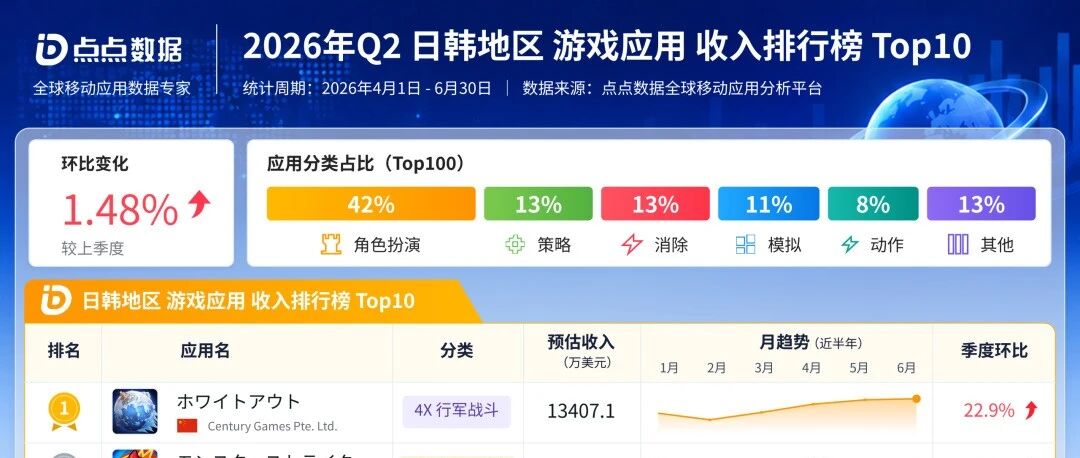
Diandian Interactive's Whiteout Survival and Kingshot top Japan/Korea Q2 2026 revenue rankings. Market shows steady growth with iOS users spending 1.2x more. Full analysis inside.
Global Mobile Gaming Revenue Dips 1% in August: Why Mid-Tier Games Are Losing
Sensor Tower's August report reveals a $66M monthly revenue drop in mobile gaming. Top titles grow while mid-tier suffers. Insights on market shifts, regional trends, and what it means for developers.

China Southern Airlines Incheon Airport Ground Staff Recruitment 2026: A Gateway for Bilingual Talent
China Southern Airlines is hiring ground staff at Incheon International Airport for 2026. Learn about the role, requirements, and why this is a strategic opportunity for Korean-Chinese bilinguals.

Korea Coast Guard 2026 Chinese Translation Exam: Key Dates & Rules
Korea Coast Guard's 2026 3rd recruitment Chinese translation written exam set for Sept 5. Learn schedule, scoring, ID rules, prohibited items, and results date.
Latest Articles
- Korea's Yoon Suk Yeol Prepares for Trump Golf Meeting
- Climate Journalism at the Tipping Point: Finding Action in Environmental Crisis
- US Lawmaker: AI Transcends Borders, Urging US-China Cooperation
- United Airlines 2027 Status Changes: Why Earning Top Tier is Getting Harder
- US-EU Double Standards Exposed: Trump's Russia Diesel Deal Sparks Global Outcry
- Walmart Expands Employee Healthcare: Free GLP-1s, Insulin, and More