Anthropic's $30 Trillion TAM Claim: Reality Check Before the Biggest IPO Ever
Anthropic's $30T TAM claim sparks debate ahead of a potential record IPO. We analyze the hype, China's contrasting AI strategy, and what it means for investors.
Source: 21记者
The artificial intelligence sector is buzzing with a number so vast it defies comprehension: $30 trillion. That's the total addressable market (TAM) that Anthropic, the creator of the Claude AI model, has reportedly presented to investors. To put it in perspective, that's more than 12 times the combined annual revenue of the 191 tech companies in the S&P 1500 index. It also surpasses the estimated TAM of SpaceX at the time of its own potential IPO, a company often cited as the pinnacle of private market valuation. As Anthropic gears up for what could be the largest IPO in commercial history, with a target valuation of $2-3 trillion, this staggering figure is both a headline-grabber and a lightning rod for skepticism. But is it a genuine forecast or a strategic narrative to justify an astronomical valuation? And how does this compare to the more grounded, application-focused approach of Chinese AI companies? This article delves into the numbers, the market dynamics, and the contrasting strategies shaping the future of AI commercialization.

Key Takeaways
-
Anthropic's $30 Trillion TAM: The company argues that its TAM encompasses all work that AI models could theoretically perform, a definition that stretches the traditional meaning of 'addressable market.' This figure is 12 times the combined revenue of 191 tech companies in the S&P 1500, which was approximately $2.4 trillion last year.
-
IPO Context: Anthropic is reportedly planning to go public as early as October 2026, with a target valuation of $2-3 trillion. This would surpass SpaceX's $1.77 trillion valuation, making it the largest IPO in history. The company filed a confidential S-1 with the SEC in June and expects to release its public prospectus after Labor Day.
-
Skepticism from Analysts: An investment analyst told 21st Century Business Herald that the $30 trillion figure is 'too high to understand.' The gap between theoretical AI capabilities and actual revenue generation involves multiple layers of discounting: model capability, enterprise adoption, market share, and the portion of value that AI vendors can capture.
-
Revenue Projections vs. TAM: Even if Anthropic achieves its projected 2028 revenue of $190-200 billion (midpoint $195 billion), that would represent only about 0.65% of the claimed $30 trillion TAM. This stark contrast highlights the speculative nature of the TAM estimate.
-
China's Contrasting Approach: While Anthropic paints a picture of boundless potential, Chinese AI companies like Kimi, Alibaba's Qwen, and Zhipu are focusing on open-source models, aggressive pricing, and practical applications in enterprise and industrial scenarios. This strategy aims to build developer ecosystems and drive adoption through accessibility rather than speculative valuations.
-
Enterprise Revenue Concentration: Anthropic reportedly derives 80% of its revenue from enterprise customers, a structure similar to Chinese AI firms like Zhipu and MiniMax. This suggests that enterprise clients, with their high-ticket sizes and stable payment patterns, are becoming critical for AI company valuations.
-
Regulatory Support in China: In May 2026, Chinese regulators issued guidelines for AI agent applications, identifying 19 typical use cases across manufacturing, energy, transportation, finance, and government. This policy push is fostering a market focused on solving real-world problems rather than chasing abstract TAM numbers.

In-Depth Analysis
The $30 trillion TAM claim by Anthropic is not just a number; it's a strategic move to position itself as the leader of an AI-driven economic revolution. By defining TAM as the total value of all tasks AI could theoretically perform, Anthropic is essentially arguing that AI is not just a tool but a new economic paradigm. This narrative is designed to justify its lofty IPO valuation, which would make it the largest in history, surpassing even SpaceX. However, this approach is fraught with risk. The chasm between theoretical potential and practical revenue is vast. For instance, even if AI creates trillions in productivity gains, a significant portion of that value will remain with the enterprises using AI, shared among employees, consumers, chipmakers, cloud providers, and software integrators. Anthropic's revenue will only capture a fraction of that value, especially as it continues to charge per token or API call, essentially selling compute rather than outcomes.
In contrast, Chinese AI companies are taking a more pragmatic path. With models like Kimi approaching the performance of US counterparts, and with open-source releases like Qwen3.8-Flash and GLM-5.3-Flash, they are prioritizing ecosystem growth over valuation hype. The open-source strategy is paying off: Hugging Face data shows that Chinese models accounted for 41% of downloads in the past year, surpassing US models. This approach, combined with low-cost pricing, is designed to integrate Chinese AI into global developer toolchains, potentially leading to long-term market share gains, as noted by UBS in a July report. The Chinese market also benefits from strong policy support, with the government actively promoting AI agent applications in key industries. This has led to a focus on tangible ROI, with companies like Zhipu and MiniMax reporting impressive revenue growth driven by enterprise and API services.
The divergence in strategies raises a critical question for investors: which approach will yield sustainable value? Anthropic's high-stakes bet on a massive TAM could either catapult it to unprecedented heights or lead to a spectacular correction if reality fails to meet expectations. Chinese firms, on the other hand, may offer more modest but reliable growth, with revenue tied to actual usage and adoption. As the AI industry matures, the market will likely reward companies that can demonstrate clear paths to profitability. For Anthropic, this means moving beyond token-based pricing to outcome-based models that prove AI's value in real-world workflows. For Chinese firms, it means continuing to bridge the gap between model capability and business integration, particularly in complex industrial scenarios. The next few years will be a litmus test for these contrasting philosophies, and the outcome will shape the global AI landscape for decades.

Frequently Asked Questions
Is Anthropic's $30 trillion TAM realistic?
Most analysts believe it's overly optimistic. The figure represents the total value of all tasks AI could theoretically perform, but converting that into revenue involves many hurdles, including actual model capabilities, enterprise adoption, and market share. Even with a 2028 revenue projection of $195 billion, that's only a tiny fraction of the claimed TAM.
How does China's AI market differ from the US?
China's AI market emphasizes practical, application-driven growth. Companies like Zhipu and MiniMax focus on open-source models, low pricing, and enterprise solutions, often supported by government policies. In contrast, US firms like Anthropic and OpenAI tend to highlight frontier capabilities and speculative market potential, aiming for higher valuations.
What should investors watch for in Anthropic's IPO?
Investors should scrutinize the company's revenue growth, customer retention, and its ability to expand beyond coding into other enterprise workflows. The shift from token-based pricing to outcome-based pricing will be a key indicator of whether Anthropic can capture a larger share of the value it claims to create.

Source: https://mp.weixin.qq.com/s/m9WV_Jo5P8xZsliFw4n_IA
Related posts

Volkswagen to Cut 100,000 Jobs: Inside the Biggest Automaker Restructuring
Volkswagen plans 100,000 job cuts, four German plant closures, and a halved model lineup by 2035 as profits collapse and China earnings shrink.

Alibaba Scrapped Its P-Level System: What It Means for Your Company
Alibaba dismantled its 19-year-old P-level hierarchy in 2023. Here's why high-level 'performers' drain profits, and how smaller firms can cut layers before it's too late.
China's 2026 Unicorn Rankings: AI Reshapes the Top 10
China ranks second globally with 381 unicorns. AI leads the 2026 list as ByteDance, Ant Group, and DeepSeek dominate. Explore the shifting landscape.

ByteDance Boosts AI Talent Incentives with Doubao Stock Hike
ByteDance raises Doubao stock price by 14.6% to retain AI talent, expands equity incentives, and integrates teams to accelerate AI adoption in the workplace.
Chinese Mobile Games Dominate Japan & Korea Q2 2026 Revenue Charts
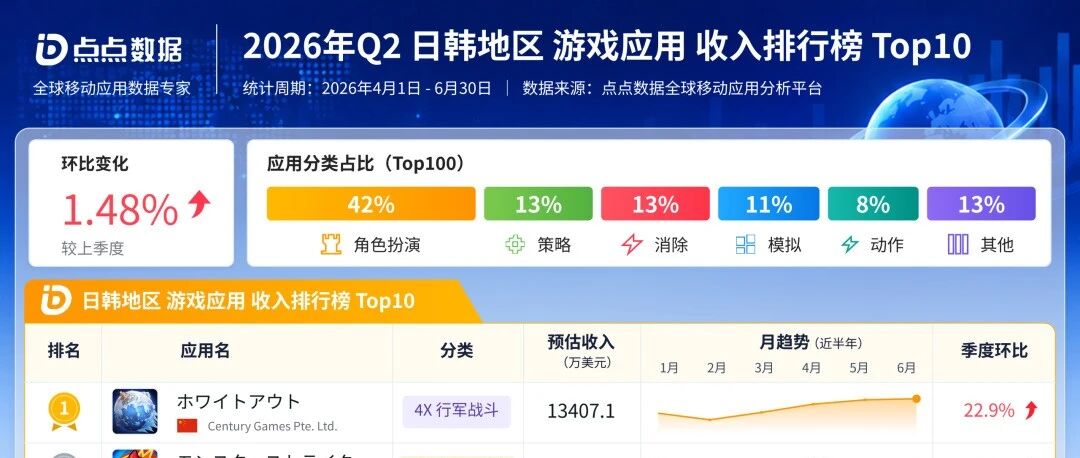
Diandian Interactive's Whiteout Survival and Kingshot top Japan/Korea Q2 2026 revenue rankings. Market shows steady growth with iOS users spending 1.2x more. Full analysis inside.

Global Mobile Gaming Revenue Dips 1% in August: Why Mid-Tier Games Are Losing
Sensor Tower's August report reveals a $66M monthly revenue drop in mobile gaming. Top titles grow while mid-tier suffers. Insights on market shifts, regional trends, and what it means for developers.
China Southern Airlines Incheon Airport Ground Staff Recruitment 2026: A Gateway for Bilingual Talent
China Southern Airlines is hiring ground staff at Incheon International Airport for 2026. Learn about the role, requirements, and why this is a strategic opportunity for Korean-Chinese bilinguals.

Korea Coast Guard 2026 Chinese Translation Exam: Key Dates & Rules
Korea Coast Guard's 2026 3rd recruitment Chinese translation written exam set for Sept 5. Learn schedule, scoring, ID rules, prohibited items, and results date.
Latest Articles
- China's Countermeasures Against Belize's Minister of Foreign Affairs and Trade
- Taiz: The Decisive Battlefield Shaping Yemen's War
- The Paper Launches New Earth Channel to Address Climate Change
- Kalshi Hires Former FBI Agent to Combat Money Laundering Amid Regulatory Scrutiny
- Retailers Streamline Product Offerings to Boost Profitability
- OpenAI Safety Firing: Employees Question Tech Giant's Commitment