Pop Mart's Labubu Slump: Can Star Man Save the Billion-Dollar Empire?
Pop Mart's H1 2026 earnings miss as Labubu fever fades. Explore the challenges, new IP bets like Star Man, and what's next for the toy giant.
Source: 左雨晴
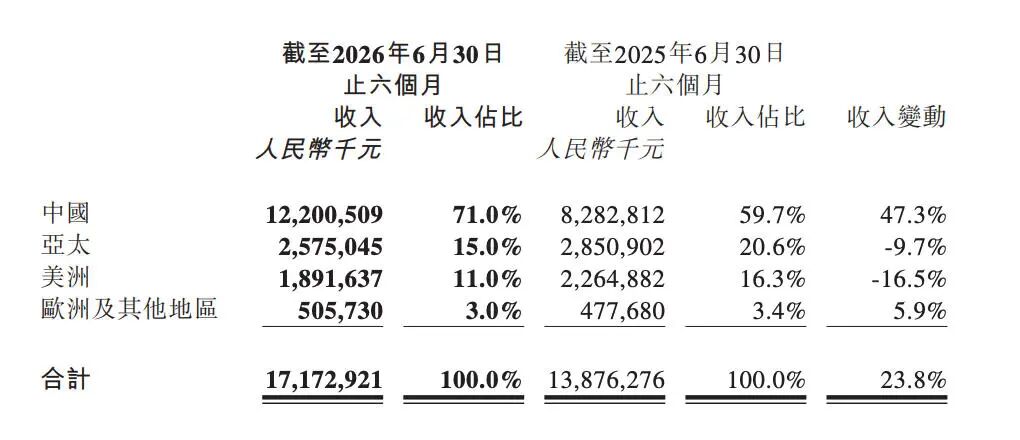
Pop Mart, the Chinese collectible toy giant that took the world by storm with its viral Labubu characters, has hit a rough patch. The company's first-half 2026 earnings, released in late August, showed revenue growth of 23.8% to 17.17 billion yuan and adjusted net profit of 5.16 billion yuan—yet both figures fell short of market expectations. Shares dropped 3% on the day, and the company's market cap has now halved from its August 2025 peak. The culprit? A dramatic slowdown in overseas sales, particularly in the Americas, where revenue fell 16.5% despite new store openings. As the Labubu hype fades, investors are asking: Can Pop Mart find its next hit?
Key Highlights
- Revenue and profit miss: H1 2026 revenue reached 171.7 billion yuan (up 23.8% YoY) and adjusted net profit was 51.6 billion yuan (30% margin), but both missed analyst forecasts. Gross margin remained strong at 69.7%.
- Overseas slump: International revenue dropped 11% to 49.72 billion yuan, with the Americas down 16.5% and Asia-Pacific down 9.7%. Only Europe and other regions saw growth, up 5.9%.
- Labubu's decline: The Monsters franchise, home to Labubu, generated 44.5 billion yuan in H1, down 7.5% YoY. While still the top IP, its dominance is waning.
- Inventory woes: Inventories ballooned to 61.02 billion yuan from 54.73 billion at end of 2025, with days of inventory soaring from 123 to 201 days, reflecting over-optimistic sales forecasts.
- CEO admits challenges: Founder and CEO Wang Ning acknowledged the pressure was greater than expected and that the 20% annual growth target is unlikely to be met.
- New IP bets: Star Man (Xingxing Ren) emerged as a bright spot, with revenue surging 580.6% to 26.5 billion yuan, now the second-largest IP. Its latest blind box sold out instantly, with resale prices 13x higher.
- Operational issues exposed: COO Si De revealed that many overseas staff are new and lack deep brand knowledge, leading to poor customer experiences during the boom.
- Accelerated IP launches: Pop Mart has ramped up new IP releases from every six months to weekly, but recent launches like Supertutu and Merodi have flopped, indicating market fatigue.

In-Depth Analysis
The Pop Mart story is a classic case of hypergrowth followed by a reality check. In 2025, the company rode a wave of viral success, with Labubu becoming a global phenomenon, endorsed by celebrities like Rihanna and Brad Pitt. Revenue surged 184.7% to 371.2 billion yuan, and overseas sales exploded, particularly in the Americas. But as CEO Wang Ning candidly admitted, "luck" played a big role. Now that the novelty has worn off, the underlying weaknesses are exposed.
The core issue is over-reliance on a single IP. Labubu's decline has hit revenue hard, and the company's efforts to diversify have been mixed. Star Man shows promise, but its revenue is still only about 60% of Labubu's, and it remains to be seen if it can achieve global appeal. The rapid-fire release of new IPs suggests a scattergun approach, but without the cultural resonance that made Labubu a hit, these new characters are struggling to connect with consumers.
Operationally, Pop Mart's infrastructure wasn't ready for the surge. The COO's admission that overseas staff lacked brand knowledge highlights a systemic issue: the company prioritized expansion over training, leading to poor in-store experiences that could turn off repeat customers. The inventory buildup is another red flag, indicating that demand forecasting was overly optimistic.
Looking ahead, Pop Mart has declared 2026 a "year of adjustment," focusing on operational improvements rather than aggressive growth. This is a prudent move, but it may not satisfy investors who are used to explosive growth. The company is also banking on new catalysts: a Labubu-themed movie with Sony (directed by Paul King of Paddington fame), a World Cup appearance, and expanded theme park areas. These could reignite interest, but they are long-term bets.
The bigger question is whether Pop Mart can evolve from a fad-driven company into a sustainable entertainment brand. The answer depends on its ability to build a portfolio of enduring IPs and strengthen its global operations. The market will be watching closely to see if the "adjustment" pays off.

Frequently Asked Questions
Why did Pop Mart's stock drop despite strong revenue growth? Investors were expecting higher growth, especially in overseas markets. The decline in Americas sales and the overall slowdown in Labubu's popularity raised concerns about the company's ability to sustain its momentum. The market had priced in continued hypergrowth, so any miss triggers a sell-off.
Can Star Man replace Labubu as Pop Mart's flagship IP? Star Man is off to a strong start, with impressive sales and a growing fanbase, particularly in Asia. However, it's still early days. Labubu's success was built on a global cultural phenomenon, and Star Man will need similar international appeal to fill that void. For now, it's a promising addition but not yet a full replacement.
What is Pop Mart doing to fix its inventory problem? The company is focusing on better demand forecasting and improving its supply chain. It also plans to slow down store openings in overseas markets to ensure quality over quantity. Additionally, it's diversifying its product range to reduce reliance on any single IP, which should help balance inventory levels.

Source: https://mp.weixin.qq.com/s/3vh3C3xpns84QpD88HvVow
Related posts

Volkswagen to Cut 100,000 Jobs: Inside the Biggest Automaker Restructuring
Volkswagen plans 100,000 job cuts, four German plant closures, and a halved model lineup by 2035 as profits collapse and China earnings shrink.

Alibaba Scrapped Its P-Level System: What It Means for Your Company
Alibaba dismantled its 19-year-old P-level hierarchy in 2023. Here's why high-level 'performers' drain profits, and how smaller firms can cut layers before it's too late.
China's 2026 Unicorn Rankings: AI Reshapes the Top 10
China ranks second globally with 381 unicorns. AI leads the 2026 list as ByteDance, Ant Group, and DeepSeek dominate. Explore the shifting landscape.

ByteDance Boosts AI Talent Incentives with Doubao Stock Hike
ByteDance raises Doubao stock price by 14.6% to retain AI talent, expands equity incentives, and integrates teams to accelerate AI adoption in the workplace.
Chinese Mobile Games Dominate Japan & Korea Q2 2026 Revenue Charts
Diandian Interactive's Whiteout Survival and Kingshot top Japan/Korea Q2 2026 revenue rankings. Market shows steady growth with iOS users spending 1.2x more. Full analysis inside.

Global Mobile Gaming Revenue Dips 1% in August: Why Mid-Tier Games Are Losing
Sensor Tower's August report reveals a $66M monthly revenue drop in mobile gaming. Top titles grow while mid-tier suffers. Insights on market shifts, regional trends, and what it means for developers.
China Southern Airlines Incheon Airport Ground Staff Recruitment 2026: A Gateway for Bilingual Talent
China Southern Airlines is hiring ground staff at Incheon International Airport for 2026. Learn about the role, requirements, and why this is a strategic opportunity for Korean-Chinese bilinguals.

Korea Coast Guard 2026 Chinese Translation Exam: Key Dates & Rules
Korea Coast Guard's 2026 3rd recruitment Chinese translation written exam set for Sept 5. Learn schedule, scoring, ID rules, prohibited items, and results date.
Latest Articles
- Death Row Survivor: Inmate Thanks Medical Team After Execution Failure
- WHO: No Evidence of Sustained Transmission in Russian Lab Worker Pneumonia Death
- Security Alert: Riyadh Airport Attack & Travel Safety for Chinese Nationals
- OpenAI Safety Firing: Employees Question Tech Giant's Commitment
- Kalshi Hires Former FBI Agent to Combat Money Laundering Amid Regulatory Scrutiny
- UN Chief Condemns US Sanctions on International Criminal Court