Fusion Energy Stocks Surge as China Targets 25T Superconducting Magnets by 2028
China's 2026 Fusion Energy Conference reveals a plan to build 25T high-temperature superconducting magnets by 2028, boosting fusion-related stocks. Market implications and future outlook.
Source: 财联社
Fusion energy, often dubbed the "holy grail" of clean power, just took a significant step forward in China. At the 2026 Fusion Energy Conference held on August 25, an ambitious initiative was unveiled: a consortium led by China Fusion Energy Co., Ltd., along with Shanghai Superconductor and other firms, will develop high-temperature superconducting (HTS) magnets for the China Flow Loop-4 (CFETR) fusion device. The goal? To establish a 25T HTS magnet manufacturing and testing line by 2028, with prototype magnets completed by 2030. This announcement sent shockwaves through the stock market, with fusion-related shares surging on the morning of August 26. Let's break down what this means for the industry and investors.
Key Highlights
-
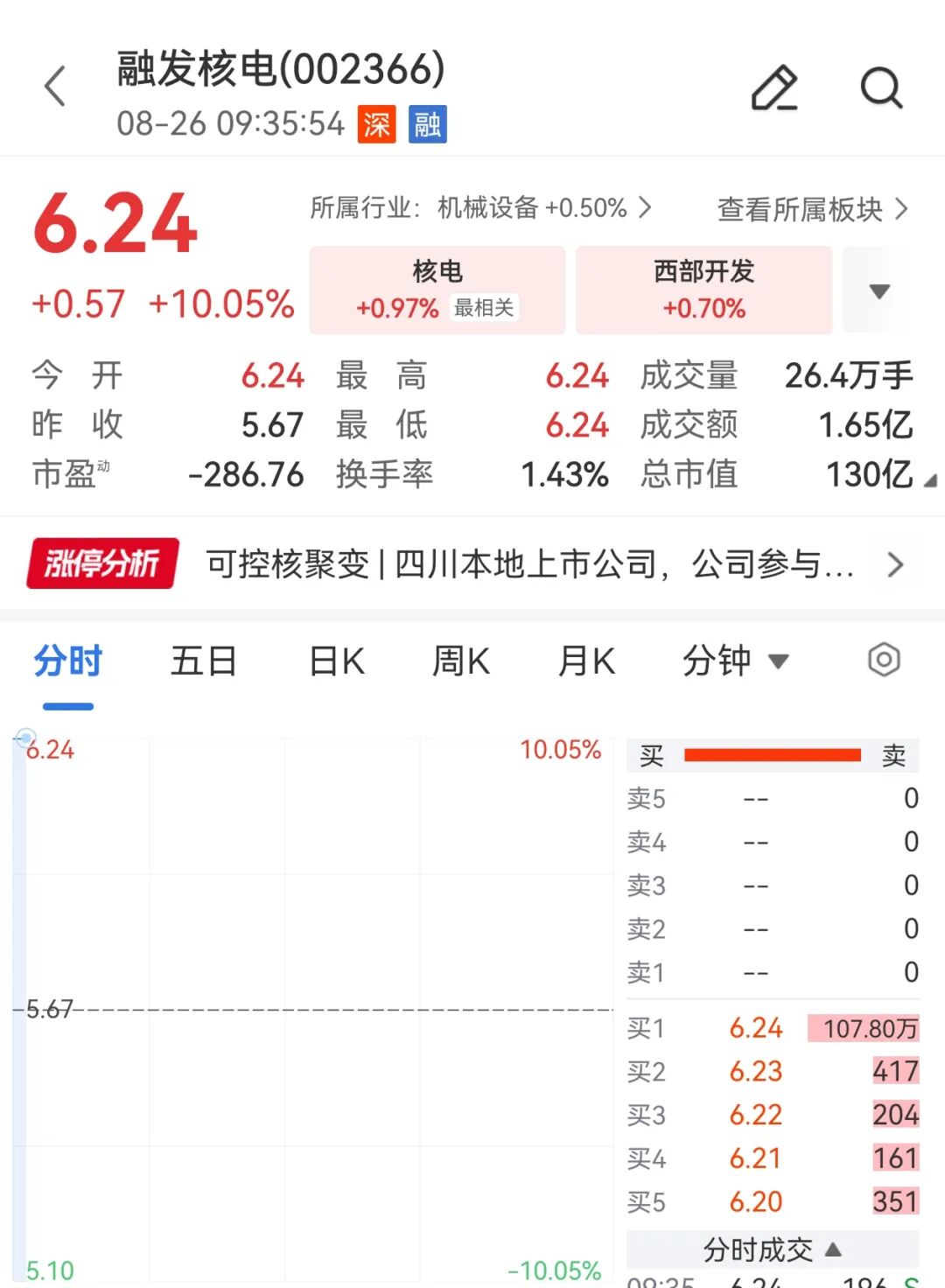
Stock Market Reaction: On August 26, 2026, fusion energy concept stocks rallied strongly. Rongfa Nuclear Power hit the daily limit (10% up) with a massive 1.07 million-lot buy order locked in. Other stocks like Hawking Welding, Changfu Equipment, Zhongzhou Special Materials, China Nuclear Construction, Lanshi Heavy Equipment, and Hongxun Technology also saw significant gains, with some rising over 10%.
-
The Announcement: The core catalyst was a statement from the 2026 Fusion Energy Conference. The newly formed Yangtze River Delta Innovation Consortium, led by China Fusion Energy Co., Ltd., will focus on developing high-temperature superconducting strong-field tokamak magnets. This is a critical component for the next-generation fusion reactor.
-
Technical Target: The consortium aims to build the first 25T HTS strong-field magnet manufacturing and testing line by 2028. This is a leap from current capabilities, as most existing magnets operate at lower field strengths. Achieving 25T would enable more compact and efficient fusion reactors, potentially accelerating the path to commercial fusion power.
-
Prototype by 2030: The plan includes completing prototype magnets by 2030. This timeline suggests that China is serious about leading the global race in fusion technology, with a clear roadmap from R&D to industrial application.
-
Key Players: The consortium includes China Fusion Energy Co., Ltd. (a subsidiary of CNNC), Shanghai Superconductor Technology Co., Ltd., and several other companies. This public-private partnership leverages both state resources and private sector innovation, a model that has proven effective in other high-tech sectors.
-
Market Context: The stock surge reflects growing investor confidence in fusion energy's commercial viability. While fusion has long been seen as a distant dream, recent breakthroughs in superconducting materials and magnet technology are bringing it closer to reality.
-
Global Competition: China is not alone in this race. The US, Europe, and Japan are also investing heavily in fusion, with projects like ITER and private ventures like Commonwealth Fusion Systems. China's aggressive timeline could position it as a leader, but the challenges remain immense.
-
Immediate Impact: In the short term, the announcement is likely to sustain momentum in fusion-related stocks, especially those involved in superconducting materials, magnet manufacturing, and nuclear engineering. However, investors should be cautious about overhyped valuations given the long development timeline.

In-Depth Analysis
This announcement is more than just a stock market catalyst; it's a strategic move in the global energy race. China's focus on high-temperature superconducting magnets is particularly noteworthy. HTS magnets are the key to making fusion reactors smaller, cheaper, and more powerful. The current international benchmark is around 20T, so aiming for 25T by 2028 is ambitious but achievable given China's rapid progress in materials science.
From an industry perspective, this initiative could spawn a new supply chain for superconducting materials and magnets. Companies like Shanghai Superconductor are already at the forefront, and this project will likely accelerate their growth. Moreover, the establishment of a dedicated manufacturing and testing line suggests that China is moving beyond research and into industrialization, which is a critical step for any technology to become commercially viable.
However, the road to fusion power is fraught with technical hurdles. Achieving 25T magnets requires breakthroughs in material properties, cooling systems, and manufacturing precision. The 2030 prototype deadline is aggressive, and delays are common in such complex projects. Investors should temper their expectations and focus on the long-term potential rather than short-term gains.
Another angle is the geopolitical dimension. Fusion energy could reduce global dependence on fossil fuels and reshape energy geopolitics. China's push to lead in fusion technology aligns with its broader strategy to dominate clean energy sectors, from solar to EVs. This could lead to increased competition with the US and Europe, but also opportunities for international collaboration, as fusion is a global scientific endeavor.
Looking ahead, if China succeeds in building a 25T HTS magnet by 2028, it would be a world first. This would not only boost China's fusion program but also have spin-off applications in other fields, such as medical imaging (MRI) and particle accelerators. The economic impact could be substantial, creating new markets and high-tech jobs.

Frequently Asked Questions
What is a tokamak and why are magnets important? A tokamak is a donut-shaped device that uses magnetic fields to confine plasma, where fusion reactions occur. Stronger magnets allow for better plasma confinement, leading to more efficient and smaller reactors. High-temperature superconducting magnets are crucial because they can generate strong fields while being more energy-efficient than conventional magnets.
How does this announcement affect global fusion research? China's commitment to a 25T magnet by 2028 sets a new benchmark for the international community. It may push other countries to accelerate their own programs, potentially leading to faster overall progress in fusion energy. It also highlights the importance of public-private partnerships in driving innovation.
Should I invest in fusion energy stocks now? While the potential is exciting, fusion energy is still years away from commercialization. Stock prices may be volatile based on news and hype. It's advisable to do thorough research, diversify, and consider the long-term fundamentals of companies rather than chasing short-term rallies. Consulting a financial advisor is always recommended.

Source: https://mp.weixin.qq.com/s/d8JSrUBrKHSjdSiF8IbAIQ
Related posts

Volkswagen to Cut 100,000 Jobs: Inside the Biggest Automaker Restructuring
Volkswagen plans 100,000 job cuts, four German plant closures, and a halved model lineup by 2035 as profits collapse and China earnings shrink.

Alibaba Scrapped Its P-Level System: What It Means for Your Company
Alibaba dismantled its 19-year-old P-level hierarchy in 2023. Here's why high-level 'performers' drain profits, and how smaller firms can cut layers before it's too late.
China's 2026 Unicorn Rankings: AI Reshapes the Top 10
China ranks second globally with 381 unicorns. AI leads the 2026 list as ByteDance, Ant Group, and DeepSeek dominate. Explore the shifting landscape.

ByteDance Boosts AI Talent Incentives with Doubao Stock Hike
ByteDance raises Doubao stock price by 14.6% to retain AI talent, expands equity incentives, and integrates teams to accelerate AI adoption in the workplace.
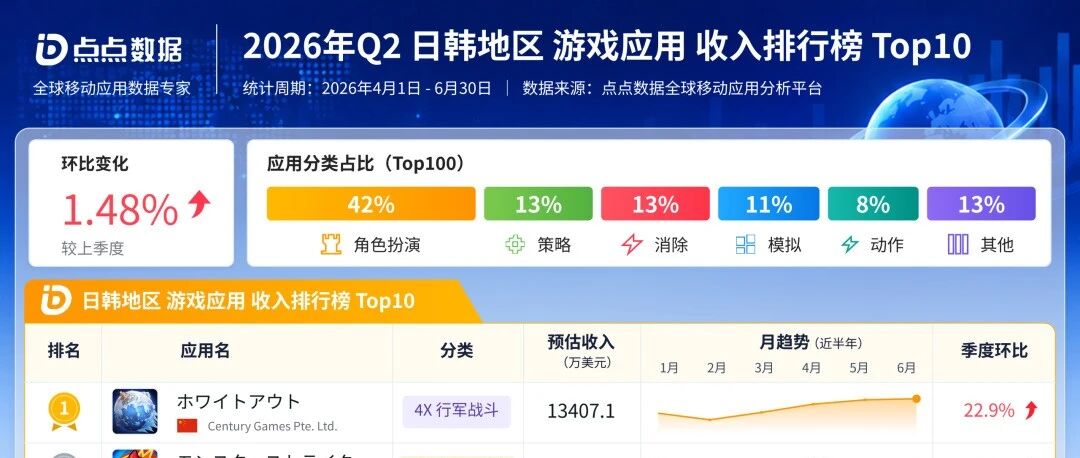
Chinese Mobile Games Dominate Japan & Korea Q2 2026 Revenue Charts
Diandian Interactive's Whiteout Survival and Kingshot top Japan/Korea Q2 2026 revenue rankings. Market shows steady growth with iOS users spending 1.2x more. Full analysis inside.

Global Mobile Gaming Revenue Dips 1% in August: Why Mid-Tier Games Are Losing
Sensor Tower's August report reveals a $66M monthly revenue drop in mobile gaming. Top titles grow while mid-tier suffers. Insights on market shifts, regional trends, and what it means for developers.

China Southern Airlines Incheon Airport Ground Staff Recruitment 2026: A Gateway for Bilingual Talent
China Southern Airlines is hiring ground staff at Incheon International Airport for 2026. Learn about the role, requirements, and why this is a strategic opportunity for Korean-Chinese bilinguals.

Korea Coast Guard 2026 Chinese Translation Exam: Key Dates & Rules
Korea Coast Guard's 2026 3rd recruitment Chinese translation written exam set for Sept 5. Learn schedule, scoring, ID rules, prohibited items, and results date.
Latest Articles
- South Korea Successfully Tests First Indigenous Hypersonic Glide Vehicle
- EU Parliament Report on China: Diplomatic Response & Future Outlook
- Starbucks Acquisition of Chipotle: A Strategic Fit or Financial Overreach?
- Japan Requests China Show 'Respect' to Prime Minister, Sparks Diplomatic Row
- Skydance & Warner Bros. Merger: Building the Next Gen Media Giant
- PepsiCo Slashes Earnings Forecast as North American Turnaround Faces Delays