Alibaba Bets Bigger on AI Than Tencent: A Deep Dive
Alibaba's latest earnings reveal a bold AI bet, with cloud and AI capex soaring while profits dip. We analyze the strategic divergence from Tencent and what it means for the future.
Source: 魏武挥二世
In the high-stakes race for AI dominance, Alibaba has placed a bet that is not only larger but also structurally different from its rival Tencent. The company's latest earnings report paints a picture of a tech giant willingly sacrificing short-term profits to secure a future where it controls the entire AI stack—from chips to cloud to applications. This strategic pivot, while risky, could redefine Alibaba's trajectory, but it also raises critical questions about sustainability and execution.
Key Takeaways
- Profit Decline, AI Surge: Alibaba's profits are falling sharply, but its cloud and AI computing business is growing rapidly, showing the contours of a second growth curve. The company is using profits from its traditional e-commerce business to fund its AI ambitions.
- E-commerce Stagnation: While Alibaba's Chinese e-commerce revenue declined 8% year-over-year, its instant retail segment (Taobao Flash, Hema) grew 45%, providing some support. However, the core platform's monetization is near zero growth.
- Cloud as the "Shovel Seller": Alibaba Cloud is the most commercially validated part of its AI strategy. Enterprise AI demand has converted into confirmed revenue, and profit margins are improving. The Bailian MaaS platform has an annualized recurring revenue exceeding 16 billion yuan.
- Massive Capital Expenditure: Alibaba invested 67.68 billion yuan in capex in the latest quarter, up 75% year-over-year, primarily for data centers, GPUs, and AI infrastructure. This marks a shift toward a heavy-asset model, similar to US tech giants.
- Full-Stack Ambition: Alibaba is building its own AI chips (Zhenwu), models (Qwen), cloud platform, and applications (Qwen App, Qwen Office) to create a vertically integrated ecosystem.
- Application Losses: The "AI Lab and Applications" segment reported a loss of 13.86 billion yuan, more than four times its revenue, highlighting the high cost of developing and promoting consumer-facing AI apps.
- Brand Strategy Divergence: Alibaba is centralizing its AI brand around Qwen, while Tencent maintains a fragmented brand portfolio (Hunyuan, Yuanbao, Xiaowei, etc.). Alibaba's approach is high-risk, high-reward.
- Structural vs. Phased Heavy-Asset: Alibaba's heavy-asset investment is structural, aiming to make cloud computing a primary growth engine. Tencent's is more phased, with a "downside protection" plan to rent out computing power if returns are unsatisfactory.

In-Depth Analysis
Alibaba's aggressive AI strategy reflects a fundamental transformation of its business model. The company is no longer just a lightweight internet platform relying on advertising and commissions; it is becoming an infrastructure operator that must build capacity upfront and rely on high utilization rates to recoup investments. This shift is reminiscent of Amazon's evolution, where AWS became the profit engine alongside e-commerce. Alibaba seems to be following a similar playbook, but with a more integrated approach.
The comparison to Google is striking: Alibaba's structure mirrors Google's with Taobao/Tmall as the cash cow (like search/ads), Alibaba Cloud as Google Cloud, Zhenwu chips as TPUs, and Qwen as Gemini. Both companies pursue vertical integration to avoid dependence on external suppliers at any layer. Alibaba's open-weight strategy for Qwen, similar to Meta's Llama, aims to attract developers and build an ecosystem, but it serves a different purpose: to strengthen its cloud and full-stack offerings.
The key risk lies in the application layer. While cloud and model services are gaining traction, consumer and enterprise willingness to pay for Qwen apps remains unproven. The massive losses in the AI applications segment indicate that Alibaba is still in the investment phase. If Qwen fails to maintain top-tier LLM status, it could tarnish the brand and undermine the entire strategy. Conversely, if it succeeds, Alibaba could create a new profit center that rivals its e-commerce business.
Looking ahead, Alibaba's bet is a calculated gamble. The company is betting that the demand for AI computing and services will grow exponentially, and that its full-stack capabilities will provide a competitive edge. The outcome will not only determine Alibaba's future but also shape the competitive landscape of China's tech industry. As the company navigates this capital-intensive period, investors will watch closely to see if the bet pays off.
Frequently Asked Questions
Why is Alibaba investing so heavily in AI infrastructure? Alibaba is investing heavily to build a competitive AI ecosystem, including cloud computing, models, and applications. This infrastructure is essential to offer AI services at scale and attract enterprise customers, aiming to create a new growth engine beyond e-commerce.
How does Alibaba's AI strategy differ from Tencent's? Alibaba focuses on vertical integration, controlling the entire AI stack from chips to applications, and treats cloud computing as a core business. Tencent, on the other hand, emphasizes applying AI to enhance its existing platforms (WeChat, ads, games) and maintains a more flexible approach, with cloud as a fallback option.
What are the risks of Alibaba's AI bet? The main risks include high capital expenditure with uncertain returns, intense competition, and the challenge of monetizing AI applications. If the AI applications fail to gain traction, Alibaba could face significant financial strain, and the brand could be damaged if Qwen models underperform.
Source: https://mp.weixin.qq.com/s/M8jbUrhzKm7NlLgdvPGuJA
Related posts

Volkswagen to Cut 100,000 Jobs: Inside the Biggest Automaker Restructuring
Volkswagen plans 100,000 job cuts, four German plant closures, and a halved model lineup by 2035 as profits collapse and China earnings shrink.

Alibaba Scrapped Its P-Level System: What It Means for Your Company
Alibaba dismantled its 19-year-old P-level hierarchy in 2023. Here's why high-level 'performers' drain profits, and how smaller firms can cut layers before it's too late.
China's 2026 Unicorn Rankings: AI Reshapes the Top 10
China ranks second globally with 381 unicorns. AI leads the 2026 list as ByteDance, Ant Group, and DeepSeek dominate. Explore the shifting landscape.

ByteDance Boosts AI Talent Incentives with Doubao Stock Hike
ByteDance raises Doubao stock price by 14.6% to retain AI talent, expands equity incentives, and integrates teams to accelerate AI adoption in the workplace.
Chinese Mobile Games Dominate Japan & Korea Q2 2026 Revenue Charts
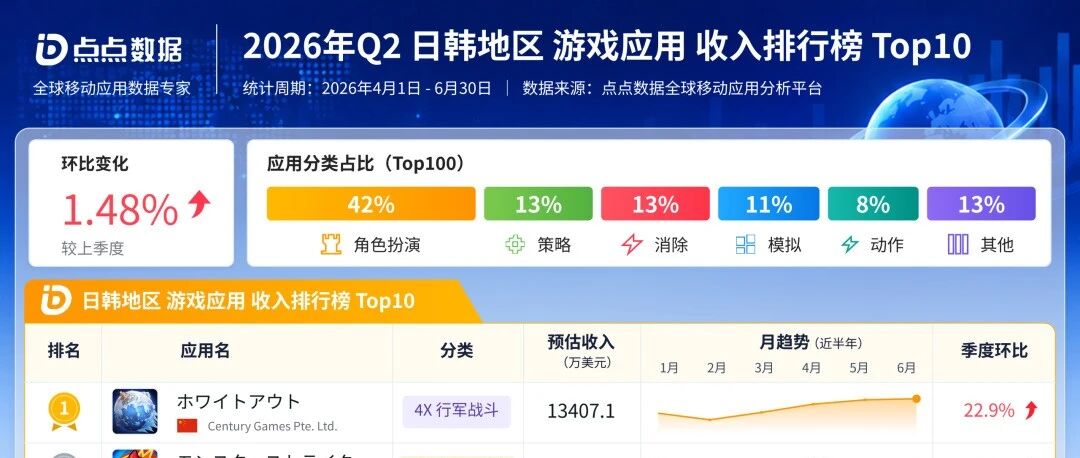
Diandian Interactive's Whiteout Survival and Kingshot top Japan/Korea Q2 2026 revenue rankings. Market shows steady growth with iOS users spending 1.2x more. Full analysis inside.

Global Mobile Gaming Revenue Dips 1% in August: Why Mid-Tier Games Are Losing
Sensor Tower's August report reveals a $66M monthly revenue drop in mobile gaming. Top titles grow while mid-tier suffers. Insights on market shifts, regional trends, and what it means for developers.

China Southern Airlines Incheon Airport Ground Staff Recruitment 2026: A Gateway for Bilingual Talent
China Southern Airlines is hiring ground staff at Incheon International Airport for 2026. Learn about the role, requirements, and why this is a strategic opportunity for Korean-Chinese bilinguals.

Korea Coast Guard 2026 Chinese Translation Exam: Key Dates & Rules
Korea Coast Guard's 2026 3rd recruitment Chinese translation written exam set for Sept 5. Learn schedule, scoring, ID rules, prohibited items, and results date.
Latest Articles
- US Budget Deficit Reaches $2 Trillion in FY 2026: A Warning Sign for Global Markets
- South Korea Successfully Tests First Indigenous Hypersonic Glide Vehicle
- EU Parliament Report on China: Diplomatic Response & Future Outlook
- Starbucks Acquisition of Chipotle: A Strategic Fit or Financial Overreach?
- Japan Requests China Show 'Respect' to Prime Minister, Sparks Diplomatic Row
- Skydance & Warner Bros. Merger: Building the Next Gen Media Giant