China's Online Ad Market in 2026: Trends, Shifts, and Key Players
Explore China's online advertising landscape from Jan-Jul 2026: budget shifts, major ad formats, top advertisers like Kuaishou and Alibaba, and successful campaigns by Yili and Tongyi Qianwen.
Source: 艾瑞咨询
China's online advertising market has shown remarkable resilience in the first seven months of 2026, with overall ad spending rising despite a shrinking pool of advertisers. The market is undergoing a structural transformation, driven by the pre-loading of major e-commerce promotions, a concentration of budgets among top players, and the rise of AI-driven products. This report dives into the key trends, sector breakdowns, and standout campaigns that are reshaping the industry.
Key Highlights
-
Overall ad spend increased across all months from January to July 2026 compared to 2025, indicating a healthy recovery in market demand. The total advertising input index for the period surpassed the previous year's levels, signaling robust growth.
-
Promotion pre-loading became the norm: Brands no longer concentrate their budgets solely in June for the 618 shopping festival. Instead, they start seeding and building consumer interest in May, extending the marketing cycle. This shift is evident in the May peak in ad spending, which was higher than June in some categories.
-
Market concentration intensified: The number of advertisers decreased significantly year-on-year, while total spending and ad days increased. This indicates that small and medium advertisers are retreating, and budgets are consolidating among top-tier players. The top 5 advertisers—Kuaishou, Alibaba, ByteDance, JD.com, and Tencent—dominate the market.
-
Information feed ads dominate: Accounting for 75.2% of advertisers, information feed ads are the primary format. Full-screen ads show a clear spike during promotion periods, while banner ads maintain steady performance for brand exposure.
-
IT products lead in spending: The IT products category accounts for 45.8% of total ad spending, followed by network services (20.2%) and cosmetics/bath products (9.0%). Within IT, mobile applications are the growth engine, contributing 82.6% of the category's ad spending.
-
Regional and corporate concentration: Beijing leads with 23.8% of ad spending, followed by Shanghai and Guangdong. Kuaishou Technology holds a 21.2% share, with Alibaba, ByteDance, and Tencent also among the top spenders. Procter & Gamble and Estée Lauder are notable non-Internet entrants.
-
Media types show a split: Community websites attract the highest ad investment (292.1 billion yuan), but video websites produce the most creative assets (223,000). This suggests community platforms command higher premium per creative, while video sites rely on volume testing.
-
Mobile dominates, OTT grows: WeChat's mobile platform sees continuous growth, while OTT (over-the-top) platforms like Tencent Video experience a surge in the second half, particularly in June and July.
In-Depth Analysis
The 2026 market data reveals a dual narrative: overall growth in ad spending alongside a contraction in the number of advertisers. This paradox points to a 'survival of the fittest' scenario where smaller players are priced out, and budgets are funneled to a few dominant corporations. The pre-loading of promotions is a strategic response to consumer behavior—brands aim to capture attention early and maintain presence through the entire purchase journey, rather than relying on a single spike.
The dominance of IT products, especially mobile apps, reflects the digital economy's expansion. With 82.6% of IT ad spending going to mobile apps, companies are aggressively promoting their apps to acquire users and drive engagement. This trend is likely to continue as AI-powered applications, such as Tongyi Qianwen, increase their marketing spend to compete in the burgeoning AI market.
Geographically, the concentration in Beijing underscores the city's status as a tech hub, housing headquarters of major Internet companies. This centralization of ad budgets aligns with the corporate concentration seen in the top spenders.
The shift in media strategy—where community websites like Xiaohongshu attract high budgets but fewer creatives—indicates a move towards quality over quantity. Brands are investing in premium placements on platforms with high user engagement, while using video and news sites for broader reach and iterative testing.
Looking ahead, the market is expected to maintain its growth trajectory, driven by AI product launches, continued e-commerce innovation, and the expansion of OTT advertising. However, the increasing concentration of budgets among a few players may raise concerns about market competition and diversity. Advertisers will need to innovate in creative content and leverage data-driven targeting to stand out in an increasingly crowded yet consolidated space.

Frequently Asked Questions
Why did the number of advertisers decrease while total ad spending increased?
The decrease in advertiser count alongside higher spending indicates a consolidation effect. Small and medium advertisers are reducing their ad budgets or exiting the market due to rising costs and intense competition. Meanwhile, large advertisers are increasing their spending to capture a larger share of consumer attention, leading to a 'winner-takes-more' dynamic.
What role does AI play in the online advertising market?
AI products like Tongyi Qianwen are becoming significant advertisers, investing heavily in promotional campaigns to drive user adoption. The integration of AI in advertising also enables more precise targeting and personalized content, making campaigns more effective. As AI continues to evolve, its influence on ad strategies and consumer engagement is expected to grow.
How is the 618 shopping festival influencing ad spending patterns?
The 618 festival has shifted from a single-day event to a month-long campaign. Brands now start advertising in May to build anticipation and 'seed' consumer interest, leading to a longer marketing cycle. This pre-loading strategy ensures sustained visibility and better conversion rates, as seen in the May peak in ad spending.
Case Study: Yili's Creative Campaign
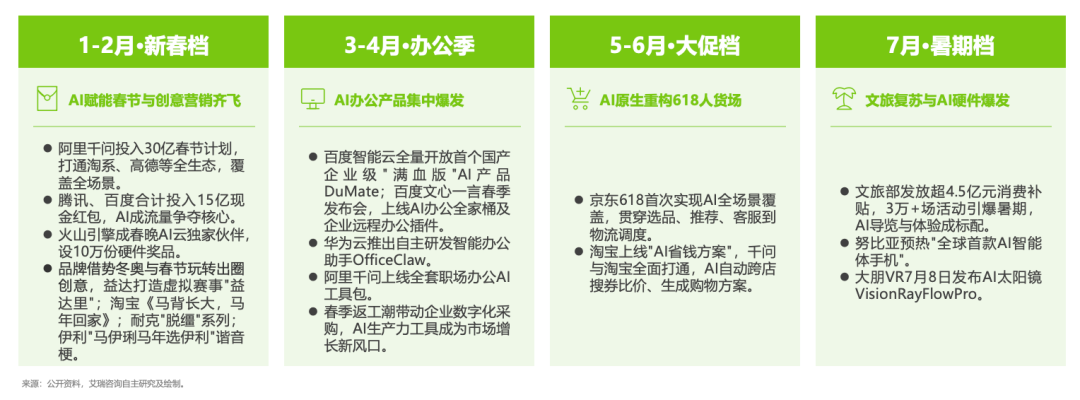
Yili's 'Year of the Horse, Choose Ma Yili' campaign is a prime example of a low-cost, high-impact marketing strategy. By leveraging a pun on the actress's name and the Chinese zodiac, Yili sparked a viral UGC wave on Weibo, with 97.2% of the conversation happening on that platform. The brand strategically timed its paid ads around the official announcement and interactive events, maximizing organic reach with minimal spend. This 'listening to netizens' approach not only boosted brand affinity but also demonstrated the power of creative, culturally relevant marketing in the digital age.
Case Study: Tongyi Qianwen's Transformation
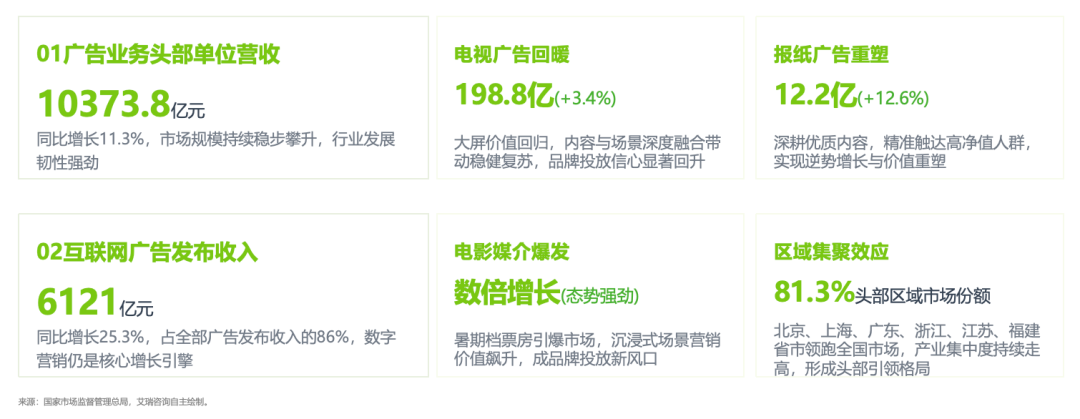
Tongyi Qianwen, Alibaba's AI assistant, successfully repositioned itself from a tool-oriented AI to a 'life practical AI' through a series of well-timed campaigns. In February, a '30 billion Spring Festival treat' freebie event drove a massive spike in social buzz and user engagement. The brand also capitalized on June's college entrance exam season with a volunteer-application tool, further solidifying its relevance in daily life. By dynamically adjusting its ad spend across channels—starting with full-screen and banner ads on news apps, then shifting to information feed ads—Tongyi effectively built awareness and drove user acquisition.
Source: https://mp.weixin.qq.com/s/9P7hbhPpQgK_HMMQD6Ioag
Related posts

Volkswagen to Cut 100,000 Jobs: Inside the Biggest Automaker Restructuring
Volkswagen plans 100,000 job cuts, four German plant closures, and a halved model lineup by 2035 as profits collapse and China earnings shrink.

Alibaba Scrapped Its P-Level System: What It Means for Your Company
Alibaba dismantled its 19-year-old P-level hierarchy in 2023. Here's why high-level 'performers' drain profits, and how smaller firms can cut layers before it's too late.
China's 2026 Unicorn Rankings: AI Reshapes the Top 10
China ranks second globally with 381 unicorns. AI leads the 2026 list as ByteDance, Ant Group, and DeepSeek dominate. Explore the shifting landscape.

ByteDance Boosts AI Talent Incentives with Doubao Stock Hike
ByteDance raises Doubao stock price by 14.6% to retain AI talent, expands equity incentives, and integrates teams to accelerate AI adoption in the workplace.
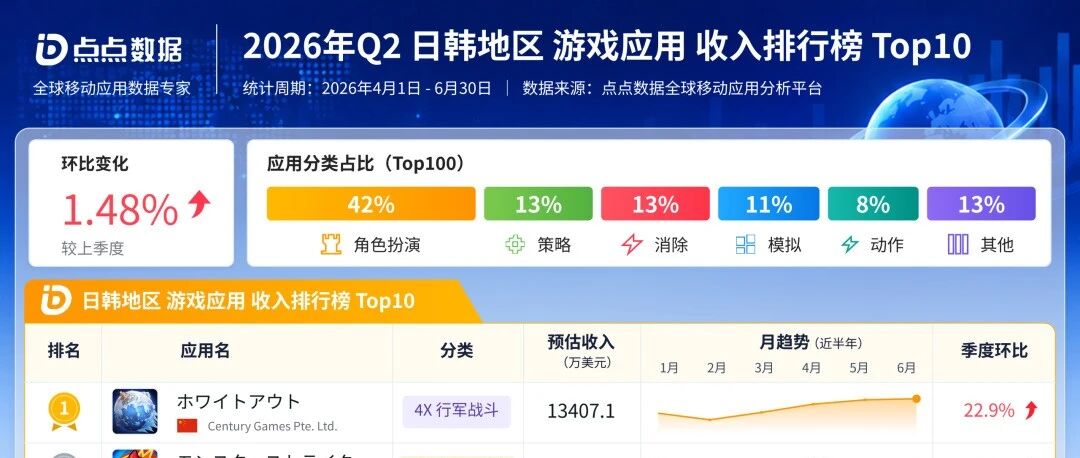
Chinese Mobile Games Dominate Japan & Korea Q2 2026 Revenue Charts
Diandian Interactive's Whiteout Survival and Kingshot top Japan/Korea Q2 2026 revenue rankings. Market shows steady growth with iOS users spending 1.2x more. Full analysis inside.

Global Mobile Gaming Revenue Dips 1% in August: Why Mid-Tier Games Are Losing
Sensor Tower's August report reveals a $66M monthly revenue drop in mobile gaming. Top titles grow while mid-tier suffers. Insights on market shifts, regional trends, and what it means for developers.
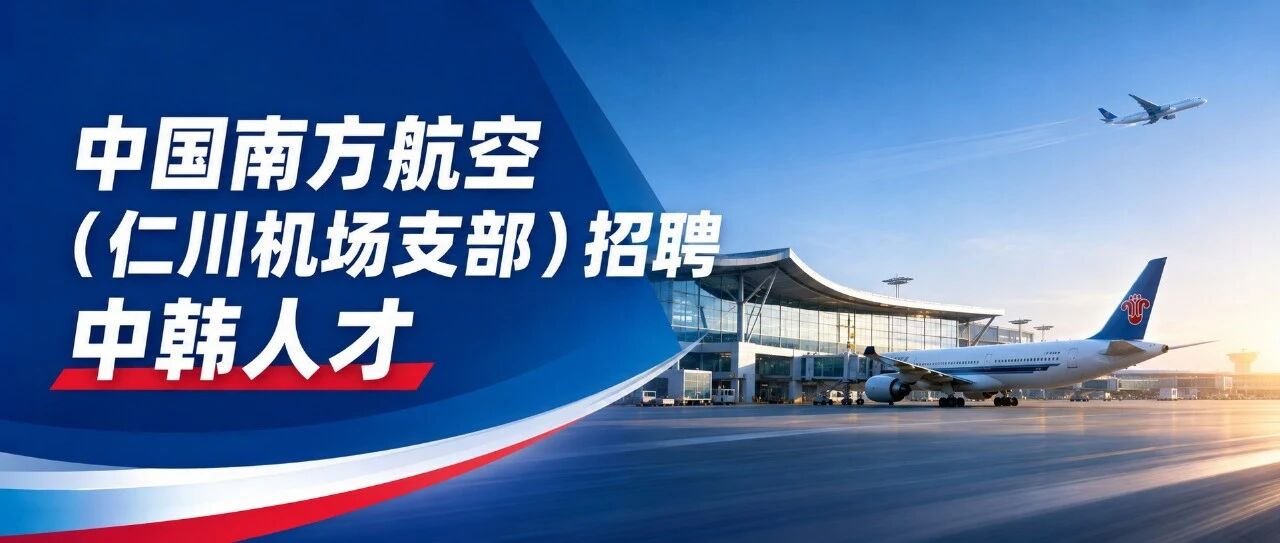
China Southern Airlines Incheon Airport Ground Staff Recruitment 2026: A Gateway for Bilingual Talent
China Southern Airlines is hiring ground staff at Incheon International Airport for 2026. Learn about the role, requirements, and why this is a strategic opportunity for Korean-Chinese bilinguals.

Korea Coast Guard 2026 Chinese Translation Exam: Key Dates & Rules
Korea Coast Guard's 2026 3rd recruitment Chinese translation written exam set for Sept 5. Learn schedule, scoring, ID rules, prohibited items, and results date.
Latest Articles
- Ukraine Expresses Betrayal Over US-Russia Diesel Deal
- UN Chief Condemns US Sanctions on International Criminal Court
- EU Parliament Report on China: Diplomatic Response & Future Outlook
- South Korea Successfully Tests First Indigenous Hypersonic Glide Vehicle
- Hurricane Isaias Prepares To Hit Gulf Coast: Oil Industry Evacuates, Refineries At Risk
- Delta Air Lines Cuts 2026 Forecast Due to Fuel Surge, Despite Strong Demand