MiHoYo's iOS Revenue Surges 119% in July, Challenging Tencent and NetEase
MiHoYo's July iOS revenue jumped 119% to $27.77M, driven by Genshin Impact, Honkai: Star Rail, and Zenless Zone Zero. How does this reshape China's gaming market?
Source: 三天游戏
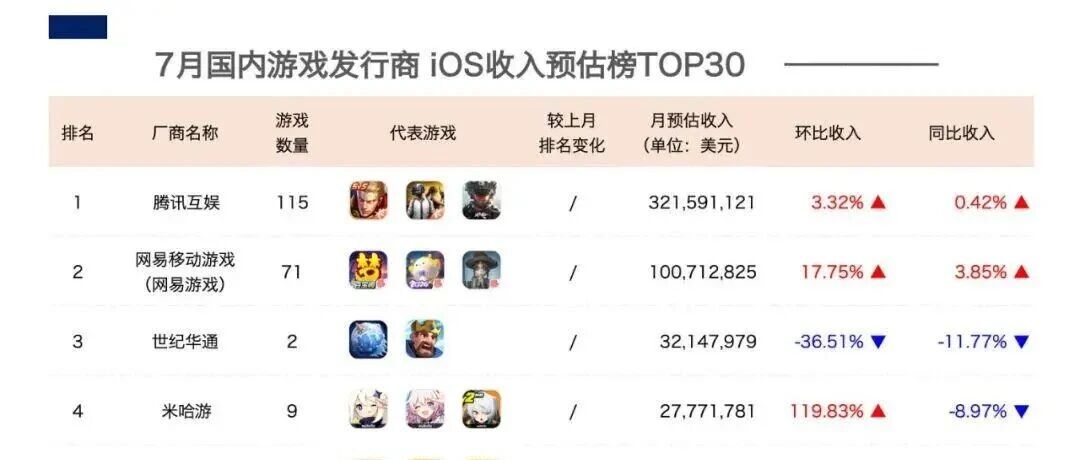
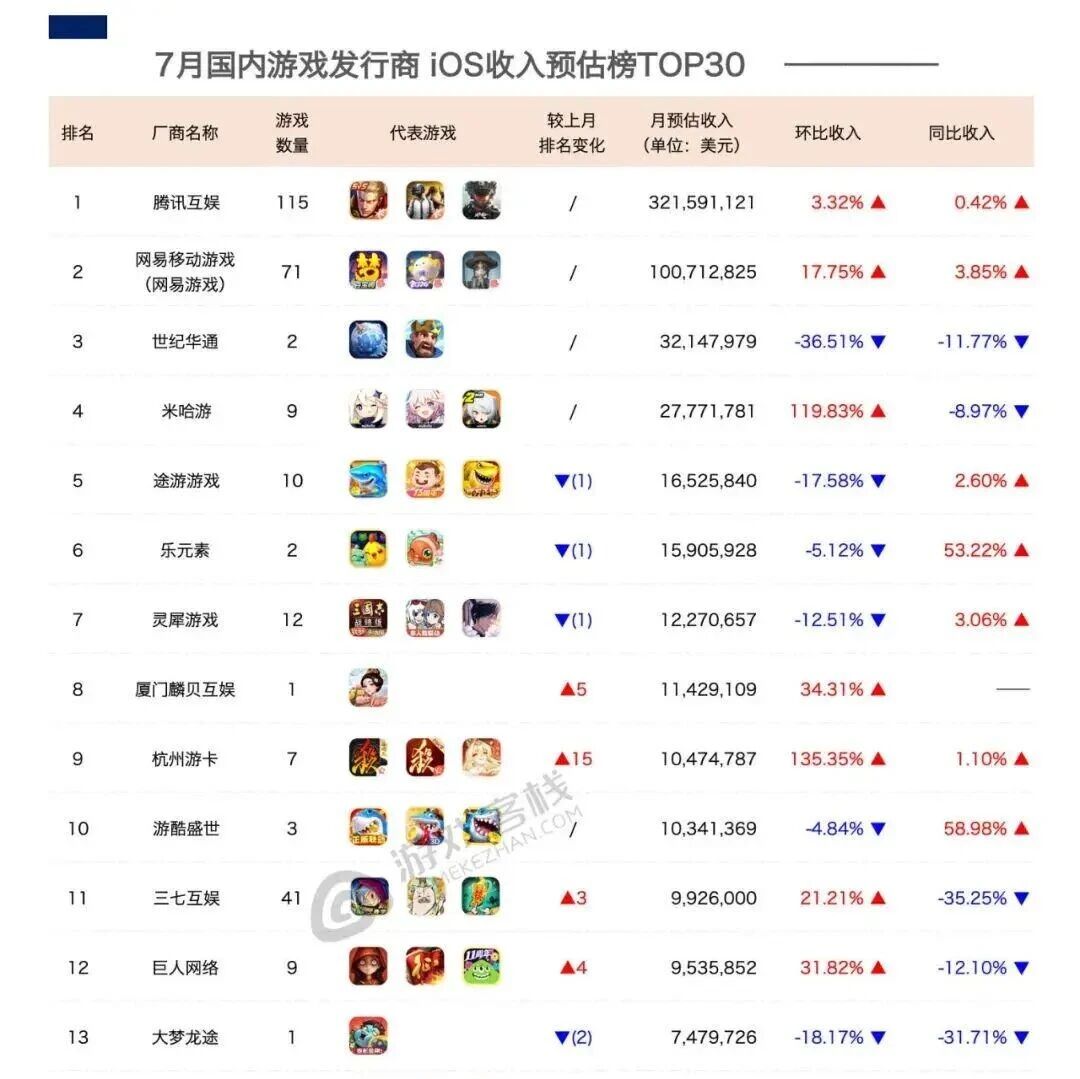
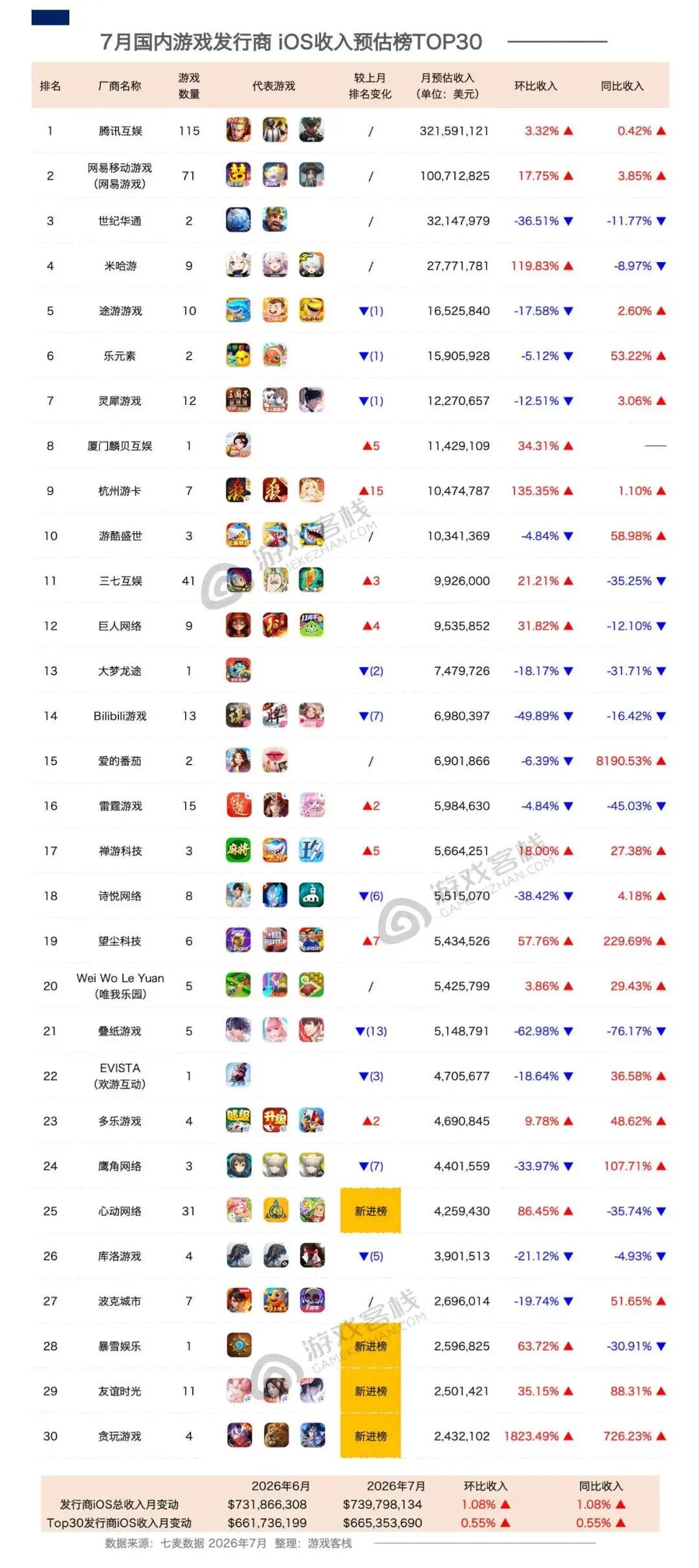
When the July revenue rankings for Chinese game companies landed, one number stood out like a neon sign in a foggy night: MiHoYo's iOS revenue had surged 119.83% month-over-month, reaching $27.77 million (approximately ¥187 million). In a month where the top 30 publishers collectively grew by a modest 0.55%, MiHoYo's explosive growth wasn't just an outlier—it was a statement. The company vaulted from outside the top 5 to 4th place, now sitting just one step behind Century Huatong. This isn't just a quarterly blip; it's a signal that the dynamics among China's gaming giants are shifting faster than ever.
Key Highlights
-
MiHoYo's iOS revenue hit $27.77 million in July, a 119.83% month-over-month increase. This represents an additional $15 million in a single month, a staggering jump for a company whose absolute numbers were already substantial. The surge was driven by simultaneous peaks across all three flagship titles.
-
Genshin Impact's 'Song of the Empty Moon' final version launched, reaching #2 on the bestseller chart on day one. The final version of a major update cycle often concentrates player spending, and this release proved no exception. It acted as a powerful revenue engine for the month.
-
Honkai: Star Rail's 4.4 version, featuring a collaboration with Fate/stay night [Unlimited Blade Works], hit #3 on the bestseller chart. The crossover with the iconic Fate franchise tapped into a massive anime fanbase, creating a perfect storm of engagement and monetization.
-
Zenless Zone Zero's 3.1 version coincided with its second anniversary, also reaching #3 on the bestseller chart. Anniversary events typically come with generous rewards and tempting banners, and Zenless Zone Zero leveraged both to drive a significant revenue spike.
-
Tencent remained #1 with $321 million in iOS revenue, up 3.32% month-over-month. Games like Honor of Kings, Peacekeeper Elite, and Delta Force continued to generate steady income, while new versions of CrossFire: Gun King Warrior and Valorant: Source Action (which surpassed 100 million registered users) added fresh momentum.
-
NetEase secured #2 with $100 million in iOS revenue, a 17.75% increase. The growth was fueled by Eggy Party's 4th anniversary event, a collaboration between Identity V and Paper Bride, and a PES tie-in with the World Cup. Despite the strong performance, NetEase's revenue remains roughly a third of Tencent's.
-
Century Huatong dropped to #3 with a notable month-over-month decline, as its flagship titles entered a content gap. This suggests the #3 spot is up for grabs, and MiHoYo is the most likely contender to claim it next month.
-
A dark horse emerged: Hangzhou Youka (Yoka Games) jumped 15 spots with a 135% monthly revenue increase. The surge was driven by the anniversary celebration of Legends of the Three Kingdoms Mobile and the dual launch of Zhijian Shanhai, proving that well-timed events can still make a big impact in a crowded market.
In-Depth Analysis
MiHoYo's July performance is remarkable not just for the numbers, but for what it reveals about the company's strategic evolution. Historically, MiHoYo's revenue was heavily dependent on a single title—Genshin Impact. But in July, all three major titles—Genshin Impact, Honkai: Star Rail, and Zenless Zone Zero—peaked simultaneously, a rare occurrence that underscores the company's ability to orchestrate content calendars across multiple games. This "pulse-style" growth model, where each game's update cycle creates a revenue wave, allows MiHoYo to maintain momentum even when individual titles see natural declines. The collaboration with Fate/stay night is particularly noteworthy, as it demonstrates MiHoYo's growing clout in securing top-tier IP partnerships, which can amplify revenue beyond what a standalone update might achieve.
From a market perspective, this surge intensifies the competitive pressure on Tencent and NetEase. Tencent's steady but modest growth of 3.32% contrasts sharply with MiHoYo's explosive spike, highlighting a divergence in growth strategies: Tencent relies on its social ecosystem and established franchises, while MiHoYo thrives on content innovation and community engagement. NetEase, despite a solid 17.75% increase, still trails Tencent by a wide margin, and its #2 position is now threatened by MiHoYo's rapid ascent. The gap between these companies is narrowing, and the competition is becoming less about absolute revenue and more about agility and the ability to capitalize on content windows.
Looking ahead, the sustainability of MiHoYo's 119% growth is questionable. Version-driven spikes typically normalize in the following month, and August is likely to see a pullback. However, the company has proven that its multi-game strategy can deliver outsized results when release schedules align. The real question is whether MiHoYo can maintain this cadence without exhausting its player base. The company's focus on high-quality, narrative-driven games with strong gacha mechanics has built a loyal following, but the market is becoming increasingly crowded. Competitors like NetEase are also investing heavily in anime-style titles, and Tencent's vast resources mean it can always pivot. The next few months will be critical in determining whether MiHoYo's "pulse" model is a sustainable competitive advantage or just a temporary spike.
Frequently Asked Questions
Why did MiHoYo's revenue surge so dramatically in July? The surge was driven by the simultaneous release of major updates across all three flagship games: Genshin Impact's final version, Honkai: Star Rail's Fate collaboration, and Zenless Zone Zero's anniversary event. Each title hit its peak spending window at the same time, creating a compounding effect that resulted in a 119% month-over-month increase.
Can MiHoYo sustain this level of growth? Probably not at the same rate. Version-driven spikes typically taper off after the initial release window. However, MiHoYo's ability to coordinate multiple titles suggests that while monthly growth may fluctuate, the overall upward trend is likely to continue as long as it maintains a steady pipeline of content and collaborations.
How does this affect Tencent and NetEase? Tencent and NetEase are now facing a more dynamic competitive landscape. Tencent's dominance is secure in the short term, but its slow growth indicates a need for innovation. NetEase, on the other hand, is at risk of losing its #2 spot if MiHoYo continues to close the gap. Both companies will need to accelerate their content strategies to keep pace with MiHoYo's rapid-fire release schedule.
Source: https://mp.weixin.qq.com/s/S44BuHLr-cuatDFgS8D9BQ
Related posts

Volkswagen to Cut 100,000 Jobs: Inside the Biggest Automaker Restructuring
Volkswagen plans 100,000 job cuts, four German plant closures, and a halved model lineup by 2035 as profits collapse and China earnings shrink.

Alibaba Scrapped Its P-Level System: What It Means for Your Company
Alibaba dismantled its 19-year-old P-level hierarchy in 2023. Here's why high-level 'performers' drain profits, and how smaller firms can cut layers before it's too late.
China's 2026 Unicorn Rankings: AI Reshapes the Top 10
China ranks second globally with 381 unicorns. AI leads the 2026 list as ByteDance, Ant Group, and DeepSeek dominate. Explore the shifting landscape.

ByteDance Boosts AI Talent Incentives with Doubao Stock Hike
ByteDance raises Doubao stock price by 14.6% to retain AI talent, expands equity incentives, and integrates teams to accelerate AI adoption in the workplace.
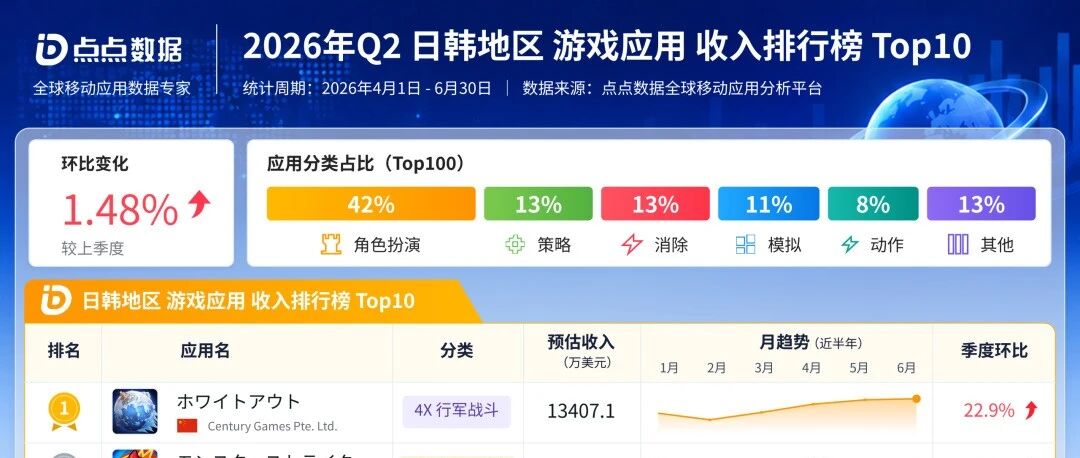
Chinese Mobile Games Dominate Japan & Korea Q2 2026 Revenue Charts
Diandian Interactive's Whiteout Survival and Kingshot top Japan/Korea Q2 2026 revenue rankings. Market shows steady growth with iOS users spending 1.2x more. Full analysis inside.

Global Mobile Gaming Revenue Dips 1% in August: Why Mid-Tier Games Are Losing
Sensor Tower's August report reveals a $66M monthly revenue drop in mobile gaming. Top titles grow while mid-tier suffers. Insights on market shifts, regional trends, and what it means for developers.
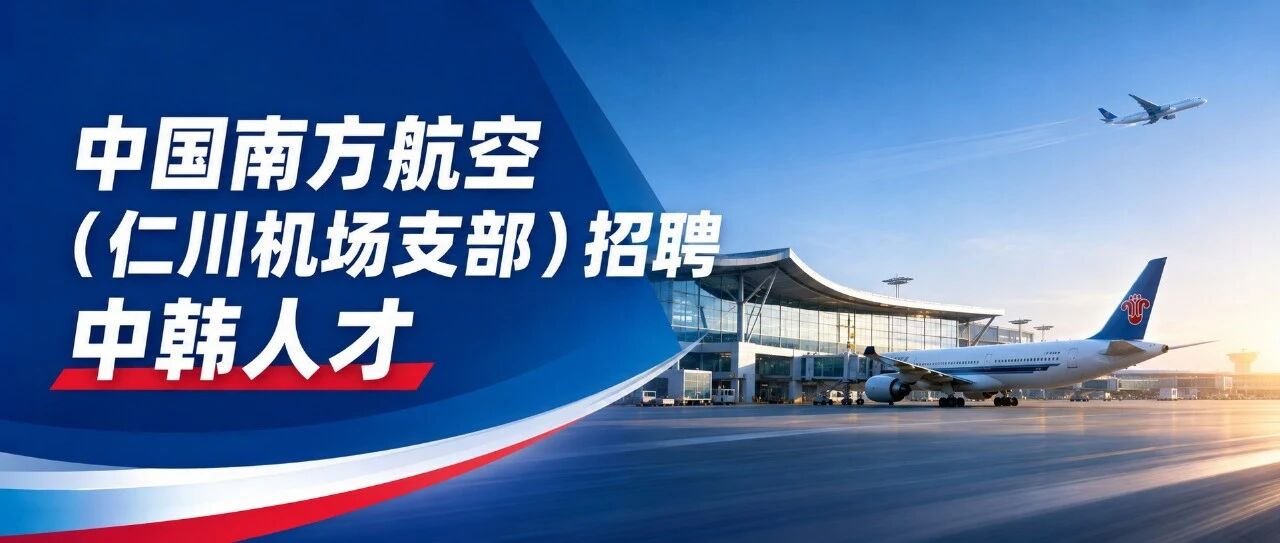
China Southern Airlines Incheon Airport Ground Staff Recruitment 2026: A Gateway for Bilingual Talent
China Southern Airlines is hiring ground staff at Incheon International Airport for 2026. Learn about the role, requirements, and why this is a strategic opportunity for Korean-Chinese bilinguals.

Korea Coast Guard 2026 Chinese Translation Exam: Key Dates & Rules
Korea Coast Guard's 2026 3rd recruitment Chinese translation written exam set for Sept 5. Learn schedule, scoring, ID rules, prohibited items, and results date.
Latest Articles
- EU Parliament Report on China: Diplomatic Response & Future Outlook
- Starbucks Acquisition of Chipotle: A Strategic Fit or Financial Overreach?
- Japan Requests China Show 'Respect' to Prime Minister, Sparks Diplomatic Row
- Skydance & Warner Bros. Merger: Building the Next Gen Media Giant
- PepsiCo Slashes Earnings Forecast as North American Turnaround Faces Delays
- German Intelligence Chief Arrested in Major Espionage Scandal