Shein IPO: From $100B Peak to $26B Debut on Hong Kong Exchange
Shein's Hong Kong IPO on Sept 1, 2026, values the fast-fashion giant at ~$26B, down 70% from its peak. Explore the reasons, key investors, and what's next.
Source: 草帽
Shein, the global online fashion giant, is finally going public. After years of speculation and regulatory hurdles, the company is set to list on the Hong Kong Stock Exchange on September 1, 2026. But the IPO price tells a dramatic story: a valuation of around $26 billion, a staggering 70% drop from its private market peak of nearly $100 billion in 2022. This isn't just a corporate milestone; it's a barometer for the fast-fashion industry, cross-border e-commerce, and the shifting tides of global capital markets. As Shein prepares to ring the bell, the question on everyone's mind is: Can it regain its former glory, or is this a new, more grounded chapter?

Key Takeaways from the IPO Prospectus
-
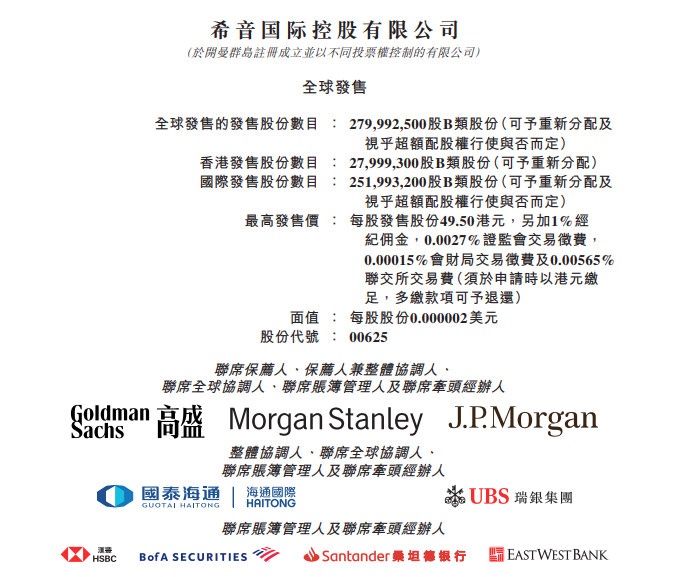
IPO Details: Shein (stock code: 00625.HK) is offering approximately 280 million Class B shares at a price range of HK$47.6 to HK$49.5 per share. The midpoint implies net proceeds of about HK$13.123 billion, with a market capitalization between HK$202 billion and HK$210.2 billion (US$25.8–26.8 billion).
-
Valuation Reality Check: The company's valuation has plummeted from $98.2 billion in a 2022 private funding round to $64 billion in 2023 and April 2024, and now to roughly $26-27 billion at IPO. This reflects a harsh reassessment by the market, driven by slowing growth, rising costs, and external pressures.
-
Financial Performance: Despite the valuation drop, Shein's fundamentals remain solid. Net revenue grew from $32.1 billion in 2023 to $38.7 billion in 2024 and $41.8 billion in 2025, a compound annual growth rate of 14.2%. Net profit in 2025 was $2.064 billion. The company serves about 273 million active customers across 160 markets.
-
Operational Model: Shein's pioneering "on-demand manufacturing" (or LATR - Large-scale Automated Small-batch Quick-response) model remains its core competitive advantage. It solves the fashion industry's "trilemma" of variety, speed, and inventory management, allowing rapid product turnover with minimal unsold stock.
-
Strategic Shift: Shein is transitioning from a pure private-label model to a hybrid platform, onboarding third-party sellers in categories like apparel, beauty, home goods, and lifestyle products. This move aims to improve profit margins and diversify revenue streams.
-
Use of Funds: Approximately 40% of the IPO proceeds will go to enhancing technology capabilities, another 40% to brand awareness and global expansion, 10% to corporate responsibility initiatives, and the remainder for general corporate purposes. This indicates a focus on tech and brand building for the next phase.
-
Investor Confidence: The cornerstone investors include heavyweight names like Boyu, Tiger Global, General Atlantic, Tencent, Greenwoods, Taikang Life, and UBS AM Singapore, collectively subscribing to about $383 million worth of shares. This signals institutional faith in Shein's long-term potential despite the lower valuation.
-
Governance Structure: Shein employs a dual-class share structure, with Class A shares carrying ten votes per share and Class B shares one vote. Co-founder Xu Yangtian and his team will control about 90% of voting rights, ensuring founder control remains intact.
In-Depth Analysis: The Rise, Fall, and Reinvention of a Fast-Fashion Titan
Shein's IPO is a watershed moment for the global e-commerce and fashion industries. The dramatic valuation cut—from $100 billion to $26 billion—is not just a reflection of Shein's specific challenges but also a broader market correction for high-growth tech and consumer companies. In 2022, when Shein raised funds at a $100 billion valuation, the market was frothy, with investors betting on continued hyper-growth. However, several factors have converged to force a reset. First, growth has inevitably slowed as the company's revenue base has become enormous. Second, operating costs have surged due to expansion into new markets, categories, and aggressive promotional spending, squeezing profit margins. Third, and perhaps most critically, the regulatory environment has turned hostile, especially in the US and EU. The US eliminated the de minimis exemption for small packages, and the EU removed the €150 customs duty exemption, forcing Shein to raise prices, localize inventory, and adjust fulfillment strategies. These changes have increased compliance costs and reduced the cost advantages that were central to Shein's value proposition.
Yet, dismissing Shein as a fallen star would be shortsighted. The company still generates over $40 billion in annual revenue and $2 billion in profit, making it one of the largest fashion retailers globally. Its on-demand manufacturing model remains a formidable moat, allowing it to test thousands of new styles daily with minimal inventory risk. Moreover, the platformization strategy is a smart pivot: by opening up to third-party sellers, Shein can offer a wider assortment without bearing the inventory risk, potentially improving margins and customer retention. The IPO's focus on technology and brand investment suggests that Shein is preparing for a future where it competes not just on price and speed but on customer experience and brand loyalty. The backing of major investors like Tencent and Tiger Global indicates that sophisticated players see value at this entry point.
Looking ahead, Shein's success will depend on its ability to navigate geopolitical tensions, particularly in the US, where it has faced scrutiny over labor practices and data security. The company has made efforts to improve transparency and compliance, but the risk of further restrictions remains. Additionally, competition from rivals like Temu and local fast-fashion players in various markets will intensify. However, if Shein can execute its platform strategy and leverage its data-driven supply chain, it could emerge as a more resilient and diversified global retail powerhouse. The IPO is not an end but a new beginning, and the market will be watching closely to see if Shein can write a compelling second act.
Frequently Asked Questions
Why is Shein's IPO valuation so much lower than its previous private valuation?
The valuation drop reflects a combination of slowing growth, rising operational costs, and increased regulatory pressures in key markets like the US and EU. Investors have become more cautious about high-growth consumer companies, especially those with exposure to geopolitical risks. The new valuation is a more conservative estimate based on current earnings and future growth prospects.
What are the risks associated with investing in Shein?
Key risks include regulatory changes in the US and EU, intense competition from rivals like Temu, potential supply chain disruptions, and the company's ability to successfully transition to a platform model. Additionally, the dual-class share structure means public shareholders have limited voting power, which may deter some governance-focused investors.
How does Shein plan to use the IPO proceeds?
Shein plans to allocate approximately 40% of the net proceeds to enhancing its technology capabilities, including AI and data analytics for its supply chain and customer personalization. Another 40% will be used for brand marketing and global expansion, particularly in emerging markets. The remaining funds will support corporate responsibility initiatives and general corporate purposes.

Source: https://mp.weixin.qq.com/s/LjxcZyE45fVk8VWvnEk10w
Related posts

Volkswagen to Cut 100,000 Jobs: Inside the Biggest Automaker Restructuring
Volkswagen plans 100,000 job cuts, four German plant closures, and a halved model lineup by 2035 as profits collapse and China earnings shrink.

Alibaba Scrapped Its P-Level System: What It Means for Your Company
Alibaba dismantled its 19-year-old P-level hierarchy in 2023. Here's why high-level 'performers' drain profits, and how smaller firms can cut layers before it's too late.

China's 2026 Unicorn Rankings: AI Reshapes the Top 10
China ranks second globally with 381 unicorns. AI leads the 2026 list as ByteDance, Ant Group, and DeepSeek dominate. Explore the shifting landscape.

ByteDance Boosts AI Talent Incentives with Doubao Stock Hike
ByteDance raises Doubao stock price by 14.6% to retain AI talent, expands equity incentives, and integrates teams to accelerate AI adoption in the workplace.
Chinese Mobile Games Dominate Japan & Korea Q2 2026 Revenue Charts
Diandian Interactive's Whiteout Survival and Kingshot top Japan/Korea Q2 2026 revenue rankings. Market shows steady growth with iOS users spending 1.2x more. Full analysis inside.

Global Mobile Gaming Revenue Dips 1% in August: Why Mid-Tier Games Are Losing
Sensor Tower's August report reveals a $66M monthly revenue drop in mobile gaming. Top titles grow while mid-tier suffers. Insights on market shifts, regional trends, and what it means for developers.

China Southern Airlines Incheon Airport Ground Staff Recruitment 2026: A Gateway for Bilingual Talent
China Southern Airlines is hiring ground staff at Incheon International Airport for 2026. Learn about the role, requirements, and why this is a strategic opportunity for Korean-Chinese bilinguals.

Korea Coast Guard 2026 Chinese Translation Exam: Key Dates & Rules
Korea Coast Guard's 2026 3rd recruitment Chinese translation written exam set for Sept 5. Learn schedule, scoring, ID rules, prohibited items, and results date.
Latest Articles
- Starbucks Acquisition of Chipotle: A Strategic Fit or Financial Overreach?
- Japan Requests China Show 'Respect' to Prime Minister, Sparks Diplomatic Row
- Skydance & Warner Bros. Merger: Building the Next Gen Media Giant
- PepsiCo Slashes Earnings Forecast as North American Turnaround Faces Delays
- German Intelligence Chief Arrested in Major Espionage Scandal
- US Company Accuses Chinese Entities of AI Attacks on Korean Banks