Jensen Huang's Daughter Madison: From Chef to Nvidia's $1.2M Physics AI Lead
Madison Huang, Jensen Huang's daughter, rose from chef to Nvidia senior director with a $1.2M salary. Her Beijing robot tour highlights Nvidia's physics AI push and China's robotics boom.
Source: 王露
When Jensen Huang's daughter Madison Huang stepped onto the floor of the 2026 World Robot Conference in Beijing, she wasn't just another attendee. As Nvidia's Senior Director of Product and Technical Marketing for the Physical AI platform, her presence signaled something bigger: the convergence of family legacy, corporate strategy, and a global robotics race that's heating up faster than ever.
Madison's journey is far from typical. She started as a chef, trained at the Culinary Institute of America, worked in restaurants, studied pastry in Paris, and even delved into wine at Le Cordon Bleu in London. Then came a stint at LVMH in marketing. But in 2019, a MIT AI course with her brother Spencer reignited her connection to technology, leading her to an MBA at London Business School and eventually an internship at Nvidia. Today, she earns around $1.2 million annually, overseeing products like Omniverse, Cosmos, Isaac, and the humanoid robot foundation model GR00T.
Her recent trip to Beijing wasn't a casual visit. She toured Chinese robotics companies like Dobot, Guanglun Intelligent, UBTech, and Kepler, experiencing firsthand the innovations that are propelling China to the forefront of physical AI. This visit comes at a critical moment: Unitree just went public on the STAR Market, and dozens of Chinese robotics firms are lining up for IPOs. The race for embodied intelligence is officially on.
Key Highlights
-
A Culinary Start: Madison initially wanted to study electrical engineering, but her father advised against it, seeing her true passion in cooking. She enrolled in the Culinary Institute of America, graduating in 2012. This detour taught her discipline and attention to detail, skills she later applied to tech.
-
Luxury to Tech: After culinary school, Madison worked in restaurants and studied pastry in Paris. She then joined LVMH, where she learned marketing and brand management. This experience gave her a unique perspective on product perfection and user experience, which she now brings to Nvidia's AI platforms.
-
The Turning Point: In 2019, Madison and her brother Spencer took an MIT AI course. That exposure sparked her interest, leading her to pursue an MBA at London Business School. The following year, she joined Nvidia as an intern, despite initially struggling with technical jargon. She kept a document of unfamiliar terms and studied them after meetings, gradually mastering the field.
-
Rise at Nvidia: Madison climbed from intern to Senior Director, now leading marketing for Nvidia's physical AI products. Her work focuses on making AI understand and interact with the real world, not just text. This includes robotics simulation, synthetic data generation, and humanoid robot foundation models.
-
Beijing Robot Tour: At the World Robot Conference, Madison visited several Chinese robotics companies. She watched a robot play ping-pong at Dobot, learned about simulation and data collection at Guanglun Intelligent, and received flowers from UBTech's Walker C1. She repeatedly exclaimed "Amazing" at the demonstrations.
-
Family Parallels: Madison's brother Spencer also took a non-linear path. He ran a cocktail bar in Asia before returning to school and joining Nvidia in 2022. He now works on robotics software and simulation. Their combined salaries, disclosed in Nvidia's 2026 fiscal year, are around $1.23 million and $1.32 million respectively.
-
Nepotism Acknowledged: During a 2025 all-hands meeting, Jensen Huang openly addressed nepotism, saying the company hires employees' children but parents rarely recommend kids who would embarrass them. He even joked that some "second-generation" employees outperform their parents.

In-Depth Analysis
Madison Huang's career trajectory is more than a personal success story; it's a lens into Nvidia's strategic pivot toward physical AI. As large language models saturate, Nvidia is betting that the next wave of growth lies in teaching machines to understand and operate in the physical world. This is why Madison's role bridges technical product development and market adoption, ensuring that tools like Omniverse and Cosmos become indispensable to robotics companies worldwide.
Her Beijing visit underscores the importance of China in Nvidia's ecosystem. Despite US export controls, China remains the world's largest robotics market, with a complete manufacturing chain and massive demand from automotive, 3C, logistics, and retail sectors. Chinese companies are not just imitators; they're innovating in humanoid robots, quadruped robots, and embodied AI. Nvidia needs these companies to adopt its platforms, and Madison's presence signals a commitment to this partnership.
The timing is crucial. China's robotics industry is entering an IPO wave, with Unitree's recent listing and dozens more in the pipeline. This influx of capital will accelerate R&D and production, potentially leading to a "ChatGPT moment" for robotics, as Unitree's founder Wang Xingxing suggests, where robots can perform most tasks in unfamiliar environments based on voice or text commands. That moment could be two to ten years away, and Nvidia aims to be the foundational layer.
However, challenges remain. The competition is fierce, with companies like Tesla, Boston Dynamics, and Chinese giants all vying for dominance. Nvidia's strength lies in its hardware and software ecosystem, but it must navigate geopolitical tensions and ensure its technology remains accessible to global partners. Madison's role in marketing these platforms is critical to building trust and driving adoption.
Looking ahead, physical AI could revolutionize industries from manufacturing to healthcare. Nvidia's early investments in simulation and synthetic data give it a head start. Madison's unique background—combining culinary precision, luxury brand sensibility, and tech savvy—makes her an effective advocate for making AI more intuitive and human-centric. As she continues to bridge the gap between cutting-edge tech and practical applications, her story inspires those who take unconventional paths to tech leadership.

Frequently Asked Questions
What is Nvidia's Physical AI platform? Physical AI refers to AI systems that understand and interact with the real world. Nvidia's platform includes Omniverse for 3D simulation, Cosmos for world models, Isaac for robot development, and GR00T for humanoid robot foundation models. These tools help developers train and deploy robots in simulated environments before real-world use.
How did Madison Huang transition from chef to tech executive? Madison's transition was gradual. After culinary school and LVMH, she took an MIT AI course with her brother, which sparked her interest. She then pursued an MBA and joined Nvidia as an intern. She actively worked to overcome her technical knowledge gaps, proving that a non-linear career path can lead to success in tech.
Is nepotism a concern at Nvidia? Jensen Huang has publicly addressed this, stating that while the company hires employees' children, they are held to high standards. He believes parents wouldn't recommend children who would embarrass them. Madison and Spencer have demonstrated their capabilities through their work, and their rise reflects their own merits.

Source: https://mp.weixin.qq.com/s/sGwLxhAUzMTvv24d1I72kA
Related posts
Volkswagen to Cut 100,000 Jobs: Inside the Biggest Automaker Restructuring
Volkswagen plans 100,000 job cuts, four German plant closures, and a halved model lineup by 2035 as profits collapse and China earnings shrink.

Alibaba Scrapped Its P-Level System: What It Means for Your Company
Alibaba dismantled its 19-year-old P-level hierarchy in 2023. Here's why high-level 'performers' drain profits, and how smaller firms can cut layers before it's too late.
China's 2026 Unicorn Rankings: AI Reshapes the Top 10
China ranks second globally with 381 unicorns. AI leads the 2026 list as ByteDance, Ant Group, and DeepSeek dominate. Explore the shifting landscape.
ByteDance Boosts AI Talent Incentives with Doubao Stock Hike
ByteDance raises Doubao stock price by 14.6% to retain AI talent, expands equity incentives, and integrates teams to accelerate AI adoption in the workplace.
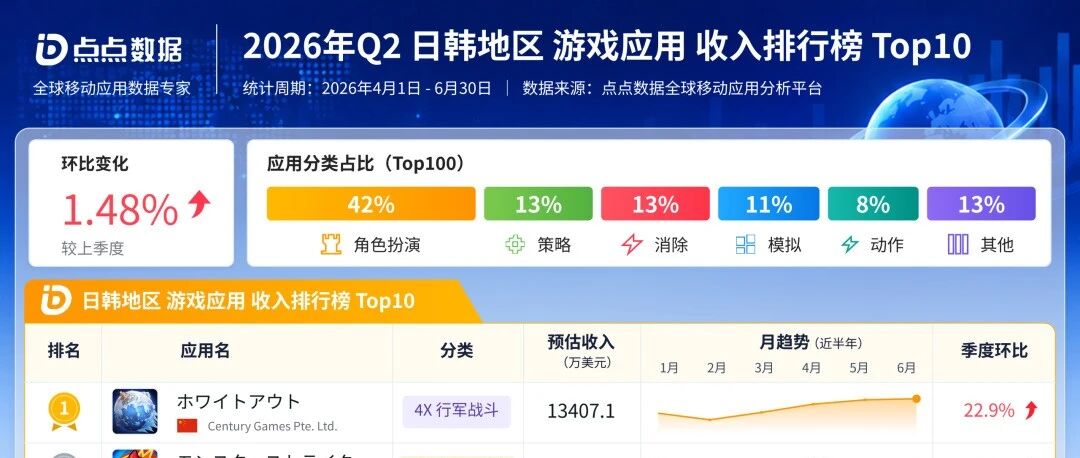
Chinese Mobile Games Dominate Japan & Korea Q2 2026 Revenue Charts
Diandian Interactive's Whiteout Survival and Kingshot top Japan/Korea Q2 2026 revenue rankings. Market shows steady growth with iOS users spending 1.2x more. Full analysis inside.

Global Mobile Gaming Revenue Dips 1% in August: Why Mid-Tier Games Are Losing
Sensor Tower's August report reveals a $66M monthly revenue drop in mobile gaming. Top titles grow while mid-tier suffers. Insights on market shifts, regional trends, and what it means for developers.

China Southern Airlines Incheon Airport Ground Staff Recruitment 2026: A Gateway for Bilingual Talent
China Southern Airlines is hiring ground staff at Incheon International Airport for 2026. Learn about the role, requirements, and why this is a strategic opportunity for Korean-Chinese bilinguals.

Korea Coast Guard 2026 Chinese Translation Exam: Key Dates & Rules
Korea Coast Guard's 2026 3rd recruitment Chinese translation written exam set for Sept 5. Learn schedule, scoring, ID rules, prohibited items, and results date.
Latest Articles
- Skydance & Warner Bros. Merger: Building the Next Gen Media Giant
- PepsiCo Slashes Earnings Forecast as North American Turnaround Faces Delays
- Japan Requests China Show 'Respect' to Prime Minister, Sparks Diplomatic Row
- German Intelligence Chief Arrested in Major Espionage Scandal
- US Company Accuses Chinese Entities of AI Attacks on Korean Banks
- Israel Closes UK Consulate in Jerusalem, Escalating Diplomatic Tensions