GM vs. Ford: New Battlegrounds in Defense and Energy Storage
GM and Ford are expanding their century-old rivalry into defense contracts and energy storage systems. Explore how these automakers are diversifying beyond EVs.
Source: CNBC
For over a century, General Motors and Ford Motor have competed in racing, vehicle sales, and nearly every aspect of the automotive industry. Now, their rivalry is taking on a new dimension: the U.S. military and the energy grid. As the Trump administration encourages domestic manufacturers to support defense efforts, and as the demand for energy storage surges, these two automotive giants are pivoting their expertise toward new frontiers. This shift comes at a time when their electric vehicle (EV) ventures have incurred billions in losses, prompting a strategic search for profitable diversification.
Core Developments
-
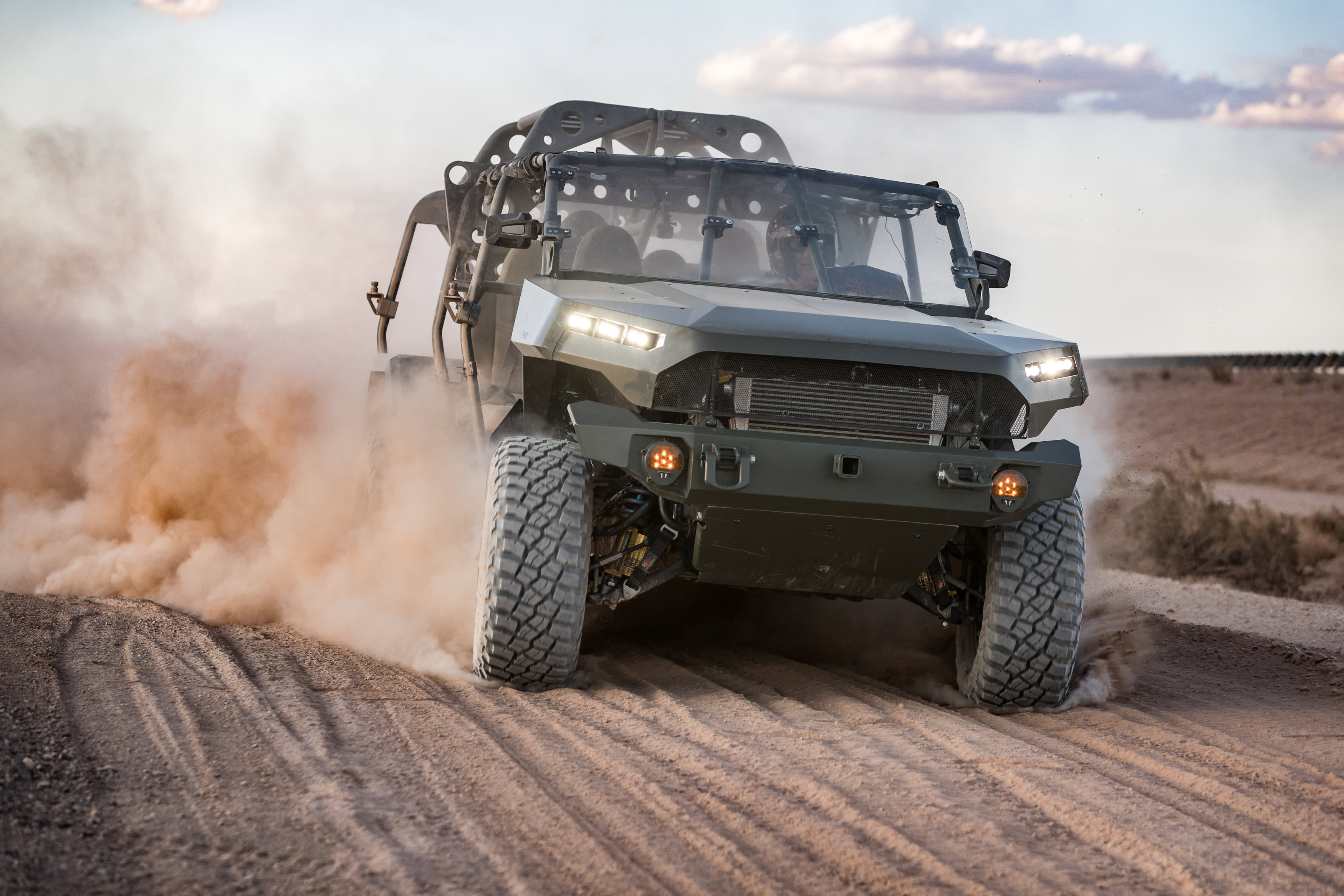
Military Contracts: Ford joined GM in 2026 in seeking U.S. military contracts, leveraging their mass manufacturing expertise. GM's defense unit, revived in 2017, recently won a U.S. Army contract for infantry squad vehicles (ISVs) potentially exceeding $1 billion. Ford, while less public, announced a partnership with General Dynamics Land Systems and Ricardo for a UK Ministry of Defence vehicle program.
-
Energy Storage Systems (ESS): Both companies are entering the ESS market, which uses EV battery technology to store power for homes, businesses, and utilities. This move capitalizes on their existing EV battery production capacity, which is currently underutilized due to slower-than-expected EV demand.
-
Market Growth Projections: The global ESS market is expected to grow from $668.7 billion in 2024 to $5.12 trillion by 2034, according to Global Market Insights. This rapid growth is driven by rising energy costs and the proliferation of data centers.
-
GM's ESS Strategy: GM's energy business currently focuses on residential EV charging and ESS, but it does not yet offer its own standalone ESS. However, its Ultium Cells joint venture with LG Energy Solution produces cells for storage, and GM is developing next-generation sodium-ion batteries with startup Peak Energy, which could reshape grid-scale storage.
-
Ford's Energy Business: Ford plans to spend $2 billion to launch an energy business, converting a Kentucky battery plant to produce ESS units by late 2027. It will also make cells for residential storage at a Michigan factory. Morgan Stanley analyst Andrew Percoco sees ESS as an "underappreciated driver" of profitability for Ford's Model e EV segment.
-
Financial Impact and Timelines: GM expects its 2026 defense revenue to approach $700 million, targeting positive EBIT this year. Ford's ESS business is expected to come online in 2027, with CEO Jim Farley noting it's in the "third inning" of selling out its 20 GWh production capacity.
-
Historical Context: This isn't the first time GM and Ford have supported national defense. During World War II, they were part of the "Arsenal of Democracy," providing military supplies to fight Nazi Germany. Today's efforts echo that legacy, albeit on a smaller scale.
Deep Dive Analysis
The strategic pivot of GM and Ford into defense and energy storage is a pragmatic response to a confluence of factors. First, the EV market's growth has not met optimistic projections, leading to massive investments in battery plants that now sit underutilized. Repurposing these facilities for ESS allows automakers to monetize their existing assets without further heavy capital expenditure. This is particularly smart as data centers and renewable energy integration drive demand for grid-scale storage.
Second, the U.S. government's push for domestic manufacturing and defense readiness creates a favorable environment for automakers to expand their government contracts. The Trump administration has streamlined processes for new suppliers, and the emphasis on reducing foreign involvement in defense products plays to the strengths of American automakers with extensive supply chains.
However, these new verticals are unlikely to become primary revenue drivers in the near term. As Morningstar's David Whiston notes, "It'll be hard to move the needle here massively, given the auto business's top line." Yet, they offer diversification and a hedge against cyclical auto sales. Moreover, they provide a narrative of innovation and resilience to investors, which is crucial as both companies navigate the transition to electrification.
The competitive dynamic between GM and Ford is also intriguing. GM has a head start in defense, while Ford is aggressively pursuing ESS. This mirrors their historical rivalry, but now they are betting on different horses. GM's focus on sodium-ion batteries and partnerships with LG and Redwood Materials suggests a long-term vision for energy, whereas Ford's approach appears more immediate, converting existing plants to generate revenue sooner.
Looking ahead, the success of these ventures will depend on execution and market dynamics. If ESS demand continues to surge, both companies could see significant returns. Defense contracts, while smaller, offer stable, long-term revenue streams. The key will be balancing these new opportunities with core automotive operations, especially as EV losses persist. The coming years will reveal whether these "new battlegrounds" prove to be profitable diversifications or just strategic distractions.
Frequently Asked Questions
Why are GM and Ford pivoting to defense and energy storage? The automakers are seeking new revenue streams after their EV ventures incurred billions in losses. Defense contracts and energy storage leverage their existing manufacturing capabilities and battery technology, offering diversification and potential profitability.
How big is the energy storage market for automakers? The global ESS market is projected to grow from $668.7 billion in 2024 to $5.12 trillion by 2034. Automakers can capitalize on this by repurposing EV battery plants to produce storage units, addressing the growing need from data centers and renewable energy integration.
Will these new ventures significantly impact GM and Ford's bottom line? While these markets are promising, they are expected to be small relative to the companies' core auto business. However, they can help offset losses and provide incremental growth. For example, GM expects defense revenue to reach $700 million in 2026, a small fraction of its quarterly revenue of $48 billion.
Source: https://www.cnbc.com/2026/09/05/gm-ford-defense-energy.html
Related posts

Japan's High-profile Yasukuni Shrine Visit: A Challenge to Post-War Order
Prime Minister Sanae Takaichi and over 70 lawmakers attend the autumn festival, provoking international condemnation.

Shanghai's Cultural Renaissance: Festival, Theater, and Consortium Illuminate the City's Artistic Future
Exploring how Shanghai's 25th International Arts Festival, Grand Theater, and Performing Arts Consortium are transforming the city into a global cultural hub through innovative programming and accessible art experiences.

Netflix cuts 1,000 jobs as streaming growth slows and competition intensifies
Netflix lays off 6% of its workforce amid stagnating viewership and the rise of competitors like Skydance and YouTube.

U.S. Loosens Fuel Economy Rules: Boost for V-8 Engines and Pickup Trucks
The U.S. lowers fuel economy targets to 34.9 mpg by 2031. Automakers see a financial tailwind, leading to a resurgence of V-8 engines and a shift away from compliance-focused EV investments.

Noah Adams: NPR Icon And Voice For Rural America
Explore the legacy of NPR's Noah Adams, a master storyteller who captured the soul of rural America and shaped public radio journalism for decades.

Social Security Benefits Boost, Russia-Ukraine War Updates, And Global Geopolitical Shifts
Explore the latest Social Security increase, the strategic implications of Russia's Starshield, and the Houthis' attack on Aramco in this comprehensive global analysis.

COP17: Critical Moment for Biodiversity Framework Implementation
As the Kunming-Montreal Global Biodiversity Framework faces implementation challenges, COP17 must deliver concrete solutions to address funding gaps, subsidy reforms, and global cooperation.

Iran's Deep Involvement in Yemen Conflict and Egypt's Potential Military Intervention
Saudi Arabia faces critical shortages in air defense due to Houthi attacks, prompting urgent requests for help. Reports reveal Iran's intelligence support for Houthi strikes, while Egypt prepares to defend Saudi sovereignty.
Latest Articles
- Haze from Kalimantan Forest Fires Reaches Jakarta Sky
- France Protests 2026: Mass Demonstrations Over Living Costs and Education
- Trump Signs Executive Order to Waive Key Sanctions on Russia Amid Energy Crisis
- LDP Senior Official Visits Yasukuni Shrine Amid Rising Regional Tensions
- Merck CEO: Cancer Vaccine Production Timeline to Shorten
- Porsche Unveils Mission S Concept: New Flagship Design Direction