South Korea Tightens Anti-Industrial-Espionage Law: What It Means for Global Business
South Korea's revised anti-industrial-espionage law takes effect as police link half of recent tech-leak cases to China. Beijing urges a fair, non-discriminatory business climate.
Source: thepaper.cn
South Korea has quietly rewritten one of the most consequential rules governing how technology crosses its borders. A revised law aimed at preventing industrial espionage took effect this week, and while the text names no country, the enforcement statistics Seoul has publicized point in a single direction. For multinationals, chipmakers, battery suppliers and anyone with a stake in Northeast Asian supply chains, the shift matters far beyond the Korean peninsula.
Key Facts
-
The revised law entered into force over the weekend. South Korean legislators amended the existing framework on protecting industrial technology, expanding the tools available to prosecutors and police when sensitive know-how is suspected of flowing to foreign actors. The timing matters: it lands amid a broader global tightening of export controls and tech-transfer screening.
-
The legislation does not single out China by name. Seoul deliberately avoided naming any specific country in the statutory text, a common diplomatic technique that preserves flexibility while still signaling intent. That ambiguity is itself a message — it lets enforcement target conduct rather than nationality on paper.
-
Korean police say roughly half of last year's overseas technology-leak investigations involved China. That figure, disclosed alongside the new law, is the political engine behind the revision. It converts an abstract national-security concern into a concrete caseload that legislators could cite.
-
Beijing responded through its foreign ministry spokesperson. At a regular press briefing, spokesperson Mao Ning said the Chinese government has consistently required its companies to conduct international cooperation in line with international rules and local laws, and added that all countries should protect normal investment and business operations and provide a fair, just and non-discriminatory environment.
-
The exchange reflects a widening pattern. Similar debates are playing out in the Netherlands, Japan and the United States, where governments are weighing how aggressively to police the movement of engineers, trade secrets and process recipes across borders.
-
Enforcement, not legislation, will determine the real impact. Statutory language is only the starting point. How aggressively Korean investigators pursue cases, and whether prosecutors bring charges against foreign-linked entities, will shape how companies actually behave.
-
Compliance costs will rise for Korean and foreign firms alike. Companies operating in Korea now face a higher bar for documenting technology transfers, joint research and personnel moves. Legal teams are already revisiting internal controls around R&D data.
Deeper Analysis
The subtext here is a familiar one in the technology cold war: governments increasingly treat industrial knowledge as a strategic asset rather than a commercial one. When a country's economic model rests on a handful of globally dominant sectors — semiconductors, displays, rechargeable batteries, shipbuilding — the leakage of process technology is not merely a corporate loss. It erodes the national export base. That logic explains why Seoul is willing to accept friction with its largest trading partner to close perceived gaps.
What makes this case notable is the deliberate ambiguity. By declining to name China, Korea keeps diplomatic channels open while giving its police and prosecutors a mandate that, in practice, will disproportionately touch Chinese-linked cases. That is a calculated middle path: tough enough to satisfy domestic security hawks and Washington, restrained enough to avoid an outright rupture with Beijing. The risk is that ambiguity cuts both ways — it can also generate uncertainty for legitimate investors who cannot tell where the line sits.
Beijing's response was measured but pointed. The phrasing about a "fair, just and non-discriminatory business environment" is the standard Chinese formulation for objecting to what it views as targeted scrutiny of its firms. It signals that China will watch enforcement closely and may respond if Korean investigations appear to single out Chinese companies or personnel. Expect this to become a recurring agenda item in bilateral economic dialogue.
Looking ahead, three dynamics will determine the outcome. First, whether Korean police publish case-by-case details that effectively name Chinese entities, which would escalate tensions. Second, whether Korean courts uphold aggressive prosecutions, establishing precedent that either emboldens or restrains investigators. Third, whether other advanced economies copy the Korean template — legislation that is formally nationality-neutral but operationally focused. If they do, multinationals should prepare for a world in which technology-transfer compliance is a permanent cost center, not a one-off legal exercise.
For global investors, the practical takeaway is straightforward. Due diligence on technology partnerships in Korea now needs to include espionage-law exposure, not just antitrust and data-privacy review. Companies should map which of their technologies fall under Korea's protected categories, document the legitimate basis for any cross-border transfer, and train staff on what constitutes a red flag. The era of treating industrial policy and criminal law as separate domains is over.
Frequently Asked Questions
Does the new law specifically target Chinese companies? No. The statutory text is nationality-neutral and does not name China. However, Korean police have publicly stated that about half of last year's overseas technology-leak investigations involved China, which suggests enforcement patterns may disproportionately affect Chinese-linked cases.
What should foreign companies operating in South Korea do now? Review any technology-sharing, joint-research or personnel arrangements involving protected Korean industrial technologies. Strengthen internal documentation, restrict access to sensitive process data, and seek local counsel on how the amended law defines a violation. Compliance programs should be updated before investigators come knocking.
How did China react? China's foreign ministry spokesperson said Beijing requires its companies to follow international rules and local laws, and called on all countries to safeguard normal investment activity and provide a fair, just and non-discriminatory business environment — a signal that China will monitor enforcement closely.
Source: https://www.thepaper.cn/newsDetail_forward_34050199
Related posts

American Airlines 2026 Forecast: Slower Growth Amid Fuel Costs
American Airlines predicts deeper losses and slower capacity growth in 2026 due to a jet fuel spike following the Iran war. Read the full analysis.
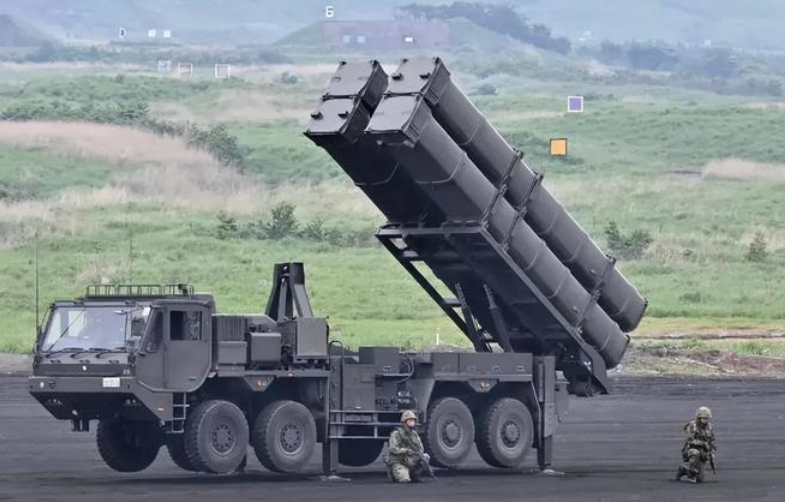
Japan Deploys 25-Type Missiles in 'Kirishima' Drill, Marking Shift in Defense Strategy
Japan's first large-scale deployment of the 25-Type land-based anti-ship missile during the US-Japan 'Kirishima' drill signals a strategic pivot away from 'strictly defensive' policies. Explore the implications of this military expansion.
Former Japanese PM Fukuda Yasuo Dies at 90: Legacy of Diplomacy and China's Call for Responsibility
Former Japanese Prime Minister Fukuda Yasuo passed away on October 22, 2026, at the age of 90. His death prompts China to reflect on the importance of historical responsibility in Sino-Japanese relations.

Chinese Woman Escapes Kidnapping in Thailand After Jumping from Moving Vehicle
A 24-year-old Chinese tourist survives abduction in Thailand, jumping from a moving car to escape captors targeting tourists with romance scams.

China to Send Giant Panda Ranran to Belgium for Diplomatic Relations
To celebrate 55 years of diplomatic ties, China is sending giant panda Ranran to Belgium. This move aims to deepen bilateral cooperation in wildlife conservation.
Lula Wins Brazilian Presidential Election with 51.79% Vote
Luiz Inácio Lula da Silva secures narrow victory in Brazil's presidential runoff, securing his fourth term as president with 51.79% of the vote.

Xi Jinping, King Philippe Celebrate 55 Years of China-Belgium Relations
President Xi Jinping and King Philippe exchanged congratulatory messages, highlighting 55 years of strategic partnership and mutual respect.

Luxury Cruise Suites: The $25,000 Night Revolution in High-End Travel
Explore the booming luxury cruise market with suites costing up to $25,000 a night. Learn how elite travel is reshaping the industry and why space and privacy are the new currency.
Latest Articles
- Wonder's Bold Vision: Texas Expansion, Automation, and User-Built Restaurants Ahead of Potential IPO
- Pepsi Extends Taco Bell Partnership Despite KFC's Switch to Coke
- Brazil Presidential Election Runoff: Bolsonaro vs. Lula
- China's Middle East Envoy Holds Key Talks with Saudi Diplomatic Advisor
- Israel Election 2026: Netanyahu Faces Historic Protests and Tight Polls
- US Travel Alert: Middle East Security Risks Rise Amid Iran and Houthi Threats