NFL TV Rights 2030: Goodell Signals Package Rework
Roger Goodell says the NFL may repackage its TV rights before the 2030 opt-out, as streaming, global expansion and media mega-mergers reshape the league's next deal.
Source: CNBC
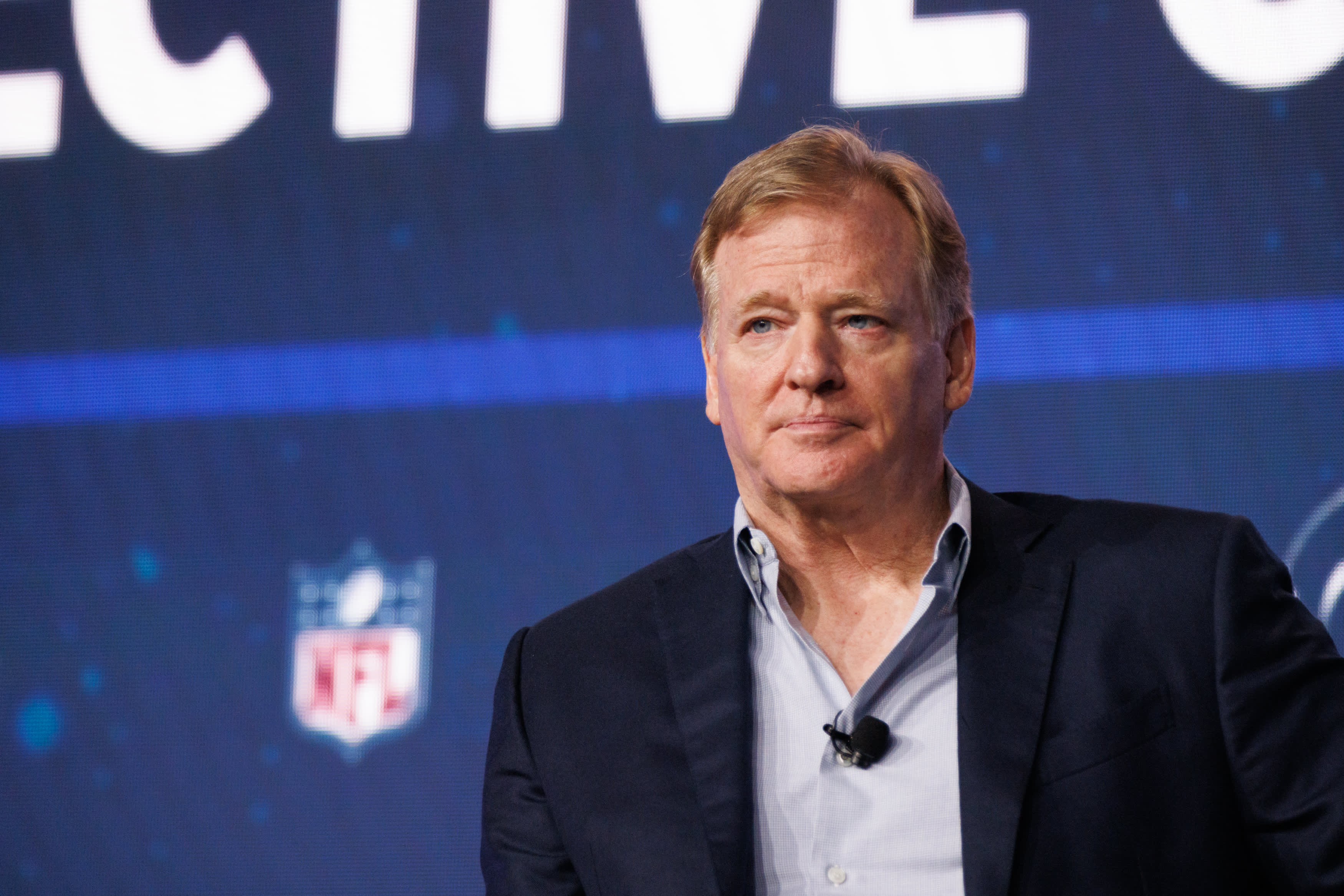
The NFL is the most valuable property in American television, and its next media rights negotiation could redraw the map for sports streaming worldwide. Speaking with CNBC ahead of the league's first regular-season game in Australia, Commissioner Roger Goodell confirmed the NFL is already studying whether to break up and rebuild its current package structure. With an opt-out clause available after the 2029-30 season and several broadcast partners in the middle of billion-dollar mergers, the timing of that decision matters far beyond football.
Key Facts
- Goodell is openly weighing a repackaging. He said the league is talking to current, future and potential partners about whether to restructure its existing packages, a notable shift from the NFL's usual silence before negotiations.
- The current split spans five main buyers. Fox and CBS hold the Sunday afternoon windows, NBC carries Sunday Night Football, ESPN and ABC own Monday Night Football, and Amazon holds Thursday Night Football. Netflix also bought rights to five additional games this season.
- An opt-out clause looms after 2029-30. The NFL can trigger it to redo and resell its packages, but Goodell declined to say whether the league will use it, calling the option "incredibly valuable" precisely because it preserves flexibility.
- Media partners are being reshaped. Paramount is pursuing Warner Bros. Discovery for $110 billion amid an antitrust challenge, Fox agreed to buy Roku for $22 billion, and Comcast plans to spin off NBCUniversal — all before the NFL sits down to renegotiate.
- Global reach is now a stated priority. The league is staging games in Spain, France and Brazil this season, and Netflix holds worldwide rights to the 49ers-Rams opener in Melbourne. Most NFL rights, however, remain U.S.-only.
- Broadcast TV is not going away. Goodell said 100% of games remain available on free over-the-air television and expects that to continue, with local stations simulcasting on streaming platforms so regional fans keep access.
- Fans are migrating across platforms. Goodell framed the challenge as following audiences rather than defending legacy windows, saying the league had "never looked at it that way until recently."
Deep Analysis
The NFL's willingness to talk publicly about repackaging is itself a signal. Historically, the league negotiates behind closed doors and lets partners announce deals on their own terms. By floating the idea of restructuring, Goodell is effectively opening a bidding conversation years early — and doing so while his partners are financially and strategically distracted.
That distraction is the real story. Paramount's $110 billion pursuit of Warner Bros. Discovery, Fox's $22 billion Roku acquisition and Comcast's planned NBCUniversal spin-off all change who sits across the table, what balance sheets they bring, and how badly they need live sports to anchor their streaming services. Live NFL games remain the single most reliable driver of simultaneous audiences in a fragmented market, which gives the league unusual leverage. If traditional broadcasters are weakened or restructured, tech platforms with global reach — Amazon, Netflix, Google's YouTube — become more plausible anchor partners.
The opt-out after the 2029-30 season is the lever that makes all of this credible. Goodell's refusal to commit either way is deliberate: uncertainty maximizes the league's bargaining position and keeps every incumbent and challenger bidding aggressively. Expect the NFL to test hybrid models — fewer, larger packages sold to global platforms, paired with protected free-to-air windows in local markets — rather than a clean break from broadcast.
The international dimension is the newest variable. Australia, Spain, France and Brazil games are not just exhibition marketing; they are tests of whether a single global rights package can eventually replace a patchwork of regional deals. Netflix's worldwide rights to the 49ers-Rams game is a small but telling experiment. If global streaming audiences prove monetizable at scale, the NFL's next deal could look less like a U.S. television contract and more like a worldwide entertainment rights portfolio. For investors in media stocks, that shift is the number to watch.
FAQ
When does the NFL's next media rights negotiation actually happen? The league holds an opt-out it can exercise at the end of the 2029-30 season, which would allow it to redo and resell its existing packages. Goodell has not committed to using it, and the current agreements otherwise run longer.
Will NFL games leave free broadcast television? Unlikely in the near term. Goodell said all games remain available on broadcast TV and expects that to continue, partly because local markets need free over-the-air access. Streaming simulcasts are being layered on top rather than replacing broadcast.
Why does global expansion matter to the media deal? Because the NFL has historically sold mostly U.S.-only rights. Games in Australia, Spain, France and Brazil, plus Netflix's worldwide rights to the Melbourne opener, test whether a global package can be sold — potentially opening a much larger revenue pool.
Source: https://www.cnbc.com/2026/09/10/nfl-roger-goodell-tv-packages-deal.html
Related posts
Meta's New Link Policy: Why Social Media Sites Want You to Stay
Meta is introducing paid plans to limit free hyperlink posting, a strategic move driven by the business model of keeping users engaged on platforms.
Darden vs. Chipotle: How Portfolio Diversification Impacts Restaurant Stock Performance in 2026
Why owning multiple brands like Darden and Brinker International outperformed single-chain giants like Chipotle and McDonald's in 2026. Analyzing the power of portfolio diversification.
High Fares And Fewer Passengers: Why Airlines Are Profitable Despite Lower Demand
As airfare surges and passenger numbers decline, major carriers prioritize yield over load factor, turning a high-price strategy into record profits despite fuel costs.
American Express Cuts 5% of Workforce to Accelerate AI Transformation
American Express announces workforce reduction of 5% to become more agile and prepare for AI integration, with a $336 million restructuring charge.
Israel Imposes Total West Bank Blockade After Hebron Attack
Israel orders a full siege of the West Bank following a deadly attack in Hebron. Here is the analysis of the escalation and the implications for regional security.

Russia Starts Diesel Exports to US: Geopolitical Shifts Ahead
Russian President's spokesperson confirms first oil tanker heading to the US, marking a significant shift in energy markets and sanctions.

Peru Allocates $1.8 Billion to Combat El Niño and Economic Headwinds
President Kina Fujimori announces a massive fiscal stimulus to address climate crises, fuel costs, and infrastructure needs in 2027.
Trump Demands SpaceX Lift Starlink Restrictions for Ukraine Amid Geopolitical Tensions
President Trump expressed dissatisfaction with SpaceX CEO Elon Musk over throttling Starlink services, demanding the removal of speed limits to aid Ukraine's defense capabilities against Russian drones.
Latest Articles
- Louvre, Orsay Museums to Close on Oct 24 Amid Paris Protests
- Moderna Cancer Vaccine Shows Promise Despite Stock Drop After Data Leak
- Wall Street Titans Debate AI Bubble: Internet Era or Long-Term Winner?
- Travel Advisory: Safety Alert for Saudi Arabia Due to Airport Attacks
- EU's Cold War Approach to China's Arctic Activities Undermines Regional Stability
- Iran's 'Father of All Bombs' Challenge to US Military Dominance